

Highlands and Islands Airports Ltd has marked its 40th anniversary with a message of thanks to the staff who have helped keep air links running across some of Scotland’s most remote communities.
The organisation, which manages regional airports across the Highlands and Islands, was officially formed on 4 March 1986 when it was incorporated by the UK Civil Aviation Authority.
Today it plays a central role in maintaining vital air connectivity for rural and island communities across the north of Scotland.
Minister for Agriculture and Connectivity Jim Fairlie paid tribute to the people who have worked across the HIAL network over the past four decades.
He said:
“Today marks the 40th anniversary of the date that Highlands and Islands Airports Limited (HIAL) was officially formed when it was incorporated by the UK Civil Aviation Authority.
“HIAL’s management and operation of regional airports, now under the ownership of Scottish Ministers, remains crucial to the socio-economic role of aviation in Scotland.
“I would like to thank everyone who is now working for or has worked at HIAL over the past four decades, for their commitment to providing excellent service to passengers and the role they have played in supporting air connectivity for our rural and island communities.”
HIAL was originally established to manage operations at eight airports across the region including Inverness, Kirkwall, Stornoway, Sumburgh, Benbecula, Islay, Tiree and Wick.
Over time the network expanded, with Barra joining in 1994, Campbeltown in 1996 and Dundee in 2007.
The airports form a vital transport lifeline linking communities to mainland Scotland and beyond, supporting everything from business travel and tourism to healthcare access and emergency services.
The history of aviation across the Highlands and Islands stretches back almost a century.
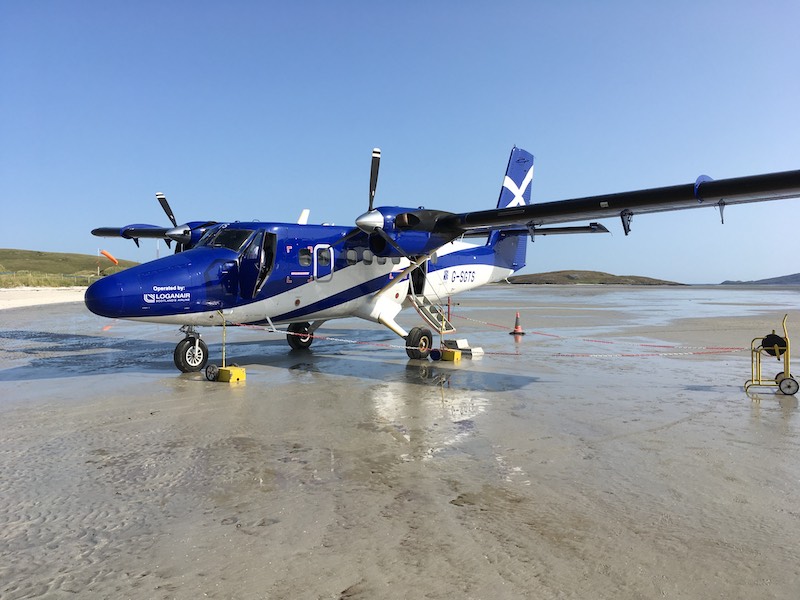
Early pioneering flights in the 1930s connected communities long before modern infrastructure existed, including the first scheduled air services in Scotland from Campbeltown in 1933 and early landings on Barra’s famous beach runway.
During the Second World War many of the region’s airfields played strategic roles supporting military operations across the North Atlantic and North Sea.
In the decades since, the airports have evolved into modern regional hubs while continuing to serve the unique needs of island and remote mainland communities.
Recent years have seen significant investment across the network including runway upgrades, terminal refurbishments, coastal protection projects and trials of new aviation technologies.
As it marks four decades since its formation, HIAL says its focus remains on supporting connectivity, resilience and economic opportunity for communities across the Highlands and Islands.


