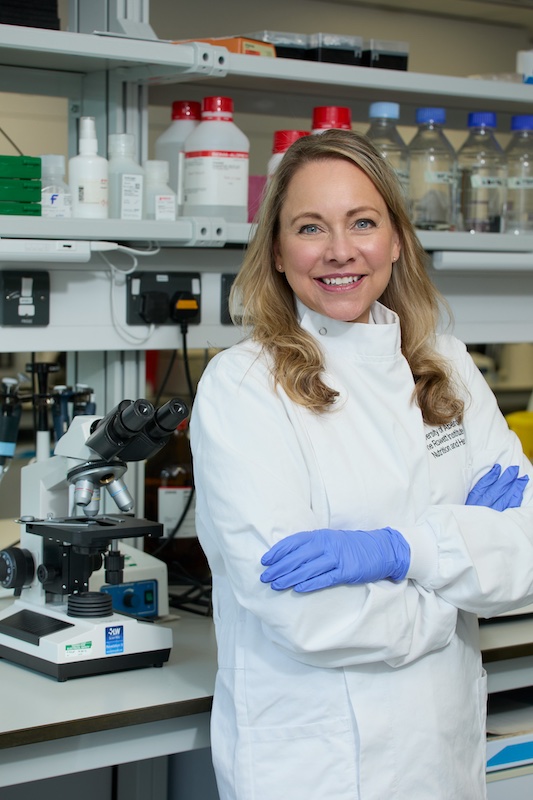
Scientists at the University of Aberdeen have made a discovery that could change our understanding of why people naturally become less active as they grow older.
Researchers at the University’s Rowett Institute have identified a brain circuit that appears to reduce our motivation to move with age, suggesting that slowing down may not simply be an inevitable consequence of growing older.
The research, led by Professor Lora Heisler and published in the scientific journal Metabolism, examined changes in physical activity among adults and laboratory mice.
The team found that adults aged between 50 and 70 generally walked more slowly, covered shorter distances and carried more body fat than those aged between 17 and 30.
Similar patterns were observed in mice, allowing researchers to investigate what might be happening inside the brain.
Their attention turned to two important chemical messengers, dopamine, which helps motivate movement, and serotonin, which can influence the activity of those pathways.
The researchers discovered that changes in serotonin signalling appeared to suppress the dopamine circuits responsible for encouraging physical activity.
Professor Heisler explained:
“Think of the brain’s movement system as a bicycle.
“The brain chemical dopamine helps push the pedals, driving the urge to move, while another chemical called serotonin puts a break on this pathway.
“With age, that brake becomes increasingly engaged, slowing voluntary movement.
“We found that releasing the brake restored more youthful levels of activity in older mice.
“Rather than the aging brain running out of fuel, our findings suggest it may be applying too much brake.
“By reducing signalling through this serotonin pathway, we were able to release that brake and restore more youthful patterns of movement in older mice.”
When scientists blocked the pathway in older mice, the results were striking.
The animals became more active, moved faster, carried less body fat and developed greater lean muscle mass, while their grip strength also improved.
The findings suggest that at least part of the decline in activity associated with ageing may be controlled by biological signals that can be altered.
Professor Heisler continued:
“Going forward, our findings suggest that targeting serotonin signalling in this pathway could one day provide new approaches to maintain mobility, independence, and healthy aging in an increasingly older population.”
The discovery is promising, although an important distinction remains between improving activity in laboratory mice and developing safe, effective treatments for people.
Researchers have not demonstrated that blocking the same pathway would restore mobility in older humans, and further studies would be needed before any treatment could be considered.
Nevertheless, understanding why people become less active could have significant implications for healthy ageing, particularly as reduced movement is associated with poorer physical health and loss of independence.
The work was supported by the Biotechnology and Biological Sciences Research Council, part of UK Research and Innovation.
Dr Amanda Collis, the council’s Executive Director for Strategic Research and International, said:
“We all tend to slow down as we get older, but until now it hasn’t been clear why.
“This BBSRC-supported research shows that part of the answer lies in the brain, identifying a pathway that appears to dial down our natural drive to be physically active with age.
“It’s a great example of how fundamental bioscience can reveal the mechanisms behind healthy ageing and open up new possibilities for helping people stay active and independent for longer.”
The Aberdeen findings offer a different perspective on a familiar part of growing older, suggesting that the desire to move may be influenced by much more than determination or physical fitness.
And while practical treatments remain a prospect for the future, the research brings scientists closer to understanding how the brain itself influences our ability to remain active throughout life.