

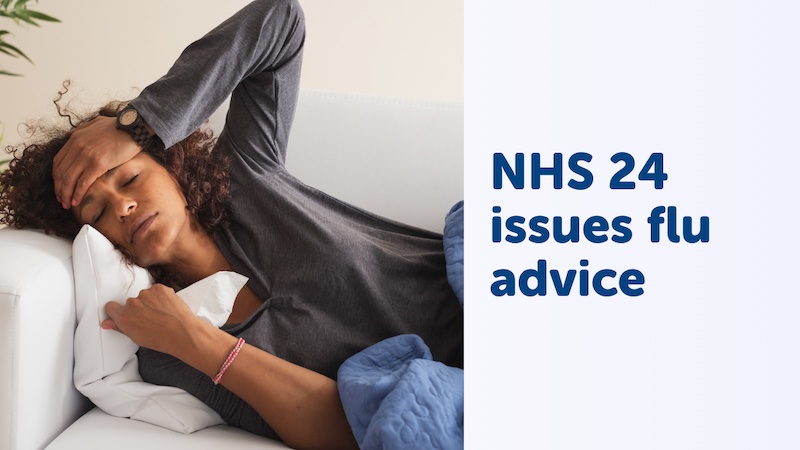
NHS 24 is urging people across Scotland to stay alert this winter as flu cases remain high and colds continue to circulate widely through communities.
Health officials say it is especially important to understand the difference between a cold and flu, know how to manage symptoms safely at home, and recognise when further medical help may be needed.
Both colds and flu are viral infections that can affect people of all ages and often share symptoms including a blocked or runny nose, sore throat, cough, fever and muscle aches.
Flu tends to arrive more suddenly and hit harder, often leaving people exhausted and unable to carry on with daily activities.
The spread of these viruses is more likely during winter months, with overcrowded indoor spaces, close contact and colder weather all contributing to higher transmission.
Dr Julie Ronald, Associate Medical Director for Acute Care at NHS 24, said the seasonal shift brings increased risk.
“It’s the time of year when we’re all indoors more, sharing space and germs.
“The downside?
“Colds and flu can strike, making you feel miserable just when you want to enjoy the festive season.”
NHS 24 says there are practical steps people can take to reduce the risk of catching or spreading illness.
Getting a flu vaccination if eligible remains one of the most effective protections.
Regular handwashing with soap and water, covering the mouth and nose when coughing or sneezing, and avoiding close contact when unwell can also help limit transmission.
For those already experiencing symptoms, NHS 24 advises resting, drinking plenty of fluids and using paracetamol or ibuprofen to manage aches, pain and fever.
Pharmacists can also offer advice on suitable over the counter remedies.
Most cases of colds and flu can be safely managed at home without medical intervention.
However, NHS 24 advises contacting a GP if symptoms are severe, breathing becomes difficult, chest pain develops, or symptoms last longer than 2 weeks.
Dr Ronald said antibiotics are not an answer for viral infections.
“Because colds and flu are caused by viral infections they don’t respond to antibiotics.
“The best way to recover from symptoms is to stay home, rest, drink plenty of fluids, and take over the counter remedies.”
She said simple steps can make a meaningful difference.
“Colds and flu are usually short lived and can be managed with simple steps.
“By looking after yourself and others, you can spend more time enjoying the season and less time feeling under the weather.”
NHS 24 encourages anyone unsure about their symptoms to use its online symptom checkers and trusted health advice services.
The service says early self care, combined with knowing when to seek help, can ease pressure on healthcare services while ensuring people get the right support when they need it.


