

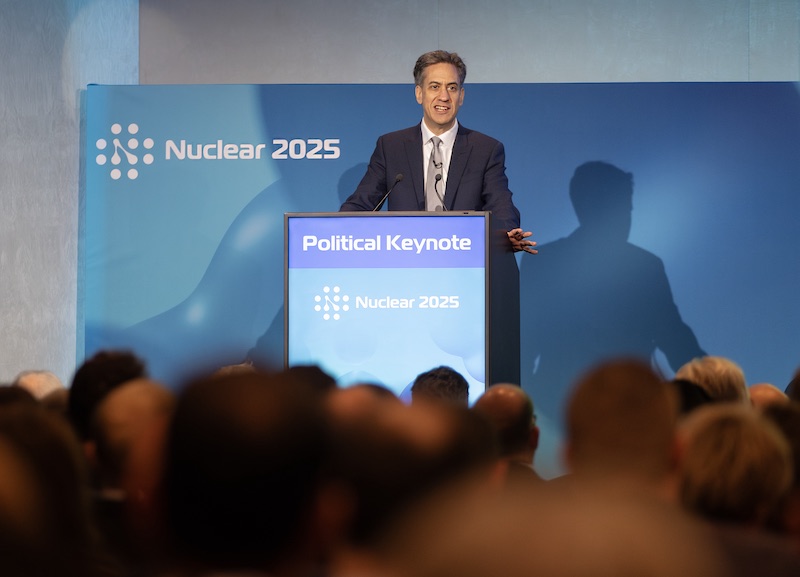
Energy Secretary Ed Miliband has said the UK is entering a golden age of nuclear power as he set out plans for the biggest expansion of the sector in half a century during a keynote speech at the Nuclear Industry Association’s Nuclear 2025 conference.
Speaking to the industry’s largest ever gathering, Miliband said the past 12 months had delivered real momentum for a sector that had spent years stalled by indecision, with new programmes, new investment and new opportunities now beginning to take shape across the country.
The Spending Review had committed the government to the most significant nuclear building programme since the 1970s, covering large scale projects such as Sizewell C, the rollout of small modular reactors, and major new investment in fusion research.
Miliband said the Sizewell C project, first identified as a potential site for new nuclear when he was Energy Secretary in the late 2000s, had finally reached financial close after 16 years, allowing construction to begin in earnest with 2000 workers already on site and nearly 100 apprentices recruited.
The project would eventually support 1500 apprenticeships and 10,000 jobs at peak construction, and could cut local unemployment by a third, with more than £2.8 billion already delivered in contracts to UK suppliers.
Small modular reactors would form a major part of the next phase of the UK’s nuclear future, with the government investing £2.5 billion into the programme and Great British Energy Nuclear selecting Rolls Royce as its preferred bidder.
Work is expected to begin next year at Wylfa, which the Energy Secretary described as the most significant investment in North Wales for a generation, with the site having capacity for up to eight small modular reactors over time.
Progress at Hinkley Point C, Sizewell C and the emerging SMR programme together represented more nuclear capacity than the UK had added in the previous fifty years, while new fusion investment of £2.5 billion would support the STEP programme at West Burton in Nottinghamshire and strengthen the UK Atomic Energy Authority’s work at Culham.
Miliband said the drive to rebuild nuclear capacity was essential for the country’s energy security, for reducing reliance on volatile fossil fuel markets and for creating the high quality, well paid jobs needed in communities outside the South East.
The civil nuclear sector already supported 98,000 jobs, up more than 10 percent in the past year, with four out of five roles based outside London.
Alongside investment, the government will publish a framework for privately funded advanced nuclear projects, reform planning rules to expand potential sites beyond the existing eight, and implement recommendations from the Nuclear Regulatory Taskforce to speed up the delivery of new projects.
The government is determined to build at pace, invest in skills, deepen supply chains and pursue opportunities for manufacturing across Britain.
The ambition shared between government and industry had never been greater and that the UK now had a chance to seize global leadership in nuclear technologies.
“This is a brilliant industry,” he said.
“Incredibly inspiring.”
“And I am so excited about everything we have done together, and what we will continue to achieve, as we build a golden age of nuclear for the United Kingdom.”


