
In November 1976, Volvo unveiled a small orange electric car that could travel just 31 miles before its batteries needed recharging, offering an early glimpse of a future that would take another half century to become familiar on Britain’s roads.
Fifty years later, the Swedish manufacturer is celebrating that pioneering experiment alongside its new EX60, an electric SUV capable of travelling a claimed 503 miles on a single charge.
The difference between the two machines tells a remarkable story about how far electric motoring has progressed.
Known simply as the Elbil, the original prototype was a boxy four seater designed to explore the possibilities of battery powered transport at a time when petrol engines dominated the industry.
Only two examples were built, including a yellow two seat delivery vehicle developed with support from the Swedish state for telecommunications workers making short journeys around Gothenburg.
The original Elbil relied on twelve six volt lead acid batteries, which required approximately ten hours to recharge.
Its modest 13 horsepower electric motor gave it a top speed of 43mph, while lightweight materials helped keep its overall weight to 1,200kg.
The car was never intended to compete with conventional family vehicles, but it demonstrated that electric power could provide practical transport without exhaust emissions.
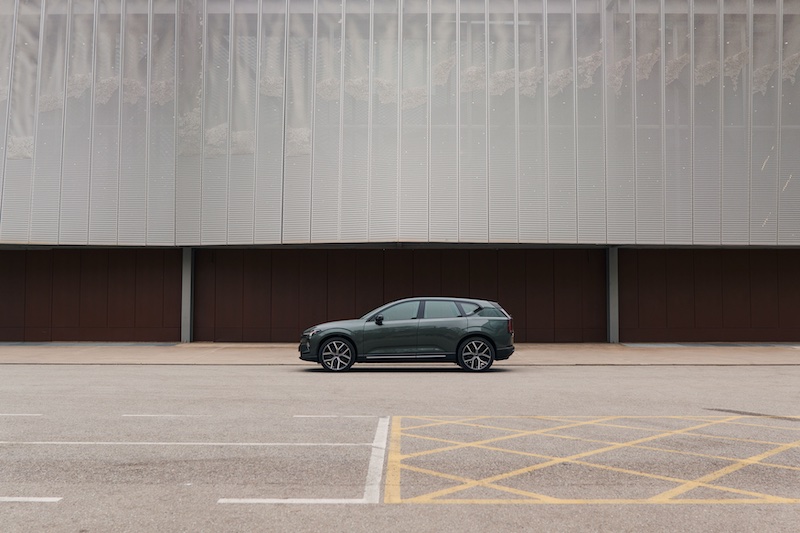
Half a century later, the EX60 represents an entirely different proposition.
The most powerful version, the P12 AWD, produces 680 horsepower, accelerates from rest to 62mph in 3.9 seconds and has a claimed range exceeding 500 miles.
Volvo says the vehicle can gain up to 211 miles of additional range during a ten minute charging stop when connected to a sufficiently powerful charger.
Its advanced lithium ion battery, integrated vehicle structure and new electric motors are a considerable departure from the mechanical simplicity of the original Elbil.
Safety, however, remains a connection between the two generations.
The 1976 prototype featured three point seatbelts and a bright orange exterior intended to make it highly visible to other road users.
The EX60 introduces Volvo’s multi adaptive safety belt, designed to adjust protection according to the occupant and circumstances, alongside connected technology that can warn drivers about hazards ahead.
Nicole Melillo Shaw, Managing Director of Volvo Car UK, said:
“The Elbil was a bold example of Volvo’s forward-thinking approach to electrification, demonstrating our ambition to explore new technologies long before electric vehicles became mainstream.
“Fifty years on, the EX60 shows just how far we’ve come, combining exceptional electric range, rapid charging and pioneering safety innovations.
“While the technology has evolved significantly, what we stand for remains unchanged, to develop cars that make life easier, safer and better for people.
“The EX60 is a testament to that commitment and an exciting example of what the future holds for Volvo Cars.”
There are important qualifications to the modern figures, with the EX60’s maximum range based on preliminary WLTP testing and real driving distances influenced by temperature, terrain, speed and driving conditions.
Rapid charging performance also depends on access to suitable equipment, something particularly relevant for motorists travelling through more remote parts of Scotland.
Nevertheless, the contrast is extraordinary, from a prototype that needed ten hours to recharge for a 31 mile journey to a family SUV designed to travel hundreds of miles between stops.
The Elbil may have looked like a curious experiment in 1976, but fifty years later its underlying idea has become central to the future of motoring.