

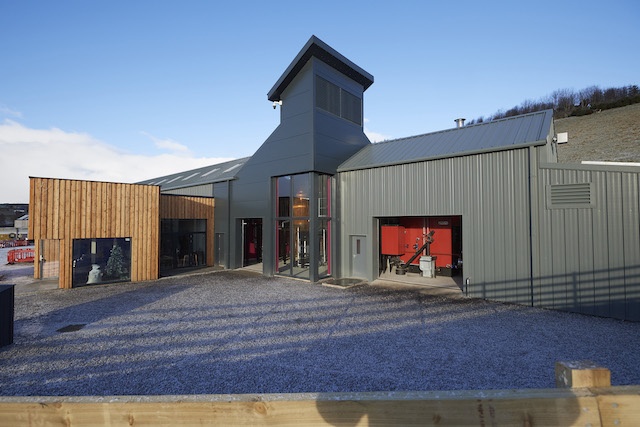
The stills have fallen silent at GlenWyvis Distillery above Dingwall, bringing to a halt for now a remarkable community venture which returned whisky making to the town after an absence of almost a century.
Three remaining members of staff have lost their jobs after Alistair McAlinden and Geoff Jacobs of Interpath were appointed joint administrators on 5 October, with production of both whisky and gin now stopped while the future of the distillery and its assets is considered.
For Dingwall, this is about considerably more than another company running into financial trouble, because GlenWyvis was created around the belief that a distillery could belong to its community and bring something lasting back to the town.
Established in 2015 beneath Ben Wyvis, the idea was to unite Dingwall around a distillery owned by ordinary people, and thousands responded by putting their own money behind that ambition.
More than 3,000 people invested during its record breaking community share offer in 2016, helping GlenWyvis revive a distilling tradition which had disappeared from Dingwall when the town’s previous whisky distillery closed in 1926.
That community grew further over the years, with GlenWyvis eventually backed by around 4,000 members and becoming the UK’s largest Community Benefit Society by membership.
There was always a wider ambition behind the whisky, with GlenWyvis describing itself as “first and foremost Dingwall’s distillery” and setting out plans to support community projects, local employment, economic activity and the regeneration of the town.
Its GoodWill Fund was created to put money back into local causes, supporting education, Highland culture and heritage and economic activity around Dingwall and the surrounding area.
That is why the consequences of administration stretch beyond the gates of the distillery, with jobs already lost, thousands of members facing uncertainty over their investments and a community now waiting to discover whether somebody can give GlenWyvis another future.
The administrators say prolonged financial pressure, difficult conditions across the whisky market, increasing operating costs and other external pressures and disputes had depleted the Society’s cash reserves.
Attempts to secure the additional investment needed to keep GlenWyvis trading ultimately failed, leaving the Management Committee with no viable alternative to administration.
There will now be no further distilling while the administrators secure GlenWyvis owned whisky stocks and distillery equipment ahead of potential asset sales, although interested parties are already being invited to come forward.
Private cask owners are in a different position, with GlenWyvis previously assuring customers that ownership of their whisky was not in question and administrators preparing further information about arrangements for those casks.
Behind all of those financial and legal processes, however, are people who worked there, people who invested because they believed in it and a Highland town which had watched whisky making return after 90 years away.
GlenWyvis was an unusually ambitious idea, asking whether a community could own its distillery, make its own whisky and use some of the benefit to support the place from which that whisky came.
For now the stills above Dingwall are silent, but a community which worked so hard to bring whisky making home will surely hope this is a pause in the GlenWyvis story rather than its final chapter.


