

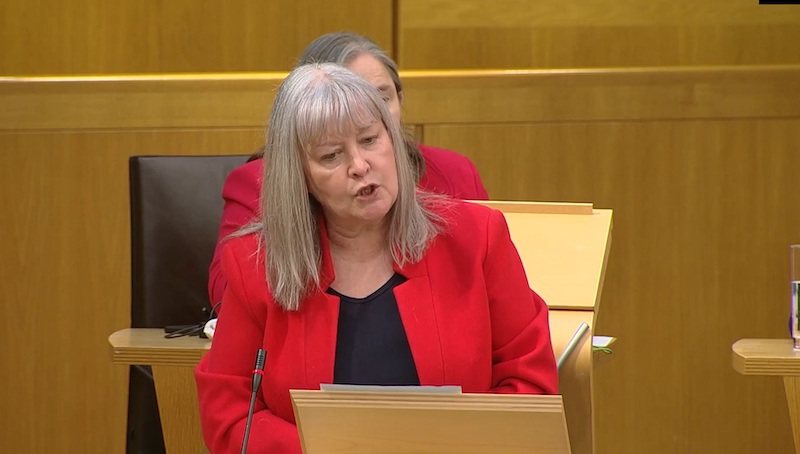
Rhoda Grant, Scottish Labour MSP for the Highlands and Islands, has welcomed the Scottish Parliament’s decision to reject the Assisted Dying Bill following a detailed and emotional debate at Holyrood.
MSPs voted to halt the progress of the proposed legislation, with concerns raised about risks to vulnerable people and the wider implications for end of life care across Scotland.
The vote has brought renewed focus on the state of palliative care services, with critics of the Bill arguing that improvements in care and support should come before any consideration of assisted dying.
Rhoda Grant said:
“This vote was about more than just a policy change, it was about a fundamental change in how we, as a society, view the value of human life.
“We must be incredibly careful when we move toward a system where the state facilitates death rather than focusing entirely on the quality of life.
“There is something inherently wrong with a system where you could potentially access help to die on the NHS, yet we still need to fundraise just to secure basic end-of-life care.
“Our priority must be to fix our broken care system, not to offer a way out of it because the support isn’t there.
“If we provide truly world-class, universal palliative care, the demand for assisted dying would fall away.”
The debate highlighted the deeply personal nature of the issue, with MSPs weighing individual choice against broader ethical and societal concerns.
Rhoda Grant added:
“I recognise that this was a difficult and deeply personal vote for every MSP.
“However, the safeguards presented were simply not enough to prevent the creeping coercion of the most vulnerable.
“In a climate where social care is stretched to its limits, the ‘choice’ to end one’s life can quickly become a perceived ‘duty’ to die to avoid being a burden.
“By rejecting this Bill, the Scottish Parliament has sent a clear message that our duty of care is absolute and that no one should ever feel pressured into ending their life due to a lack of social or medical support.”
The decision leaves Scotland’s approach to assisted dying unchanged, but it also intensifies calls for reform and investment in palliative care services.
For many, the outcome reflects a cautious approach to a complex and sensitive issue, with the focus now shifting towards how best to support people at the end of life.
The Scottish Parliament has rejected the Assisted Dying Bill, with concerns over safeguarding and palliative care driving the decision as debate continues over how best to support people at the end of life.


