

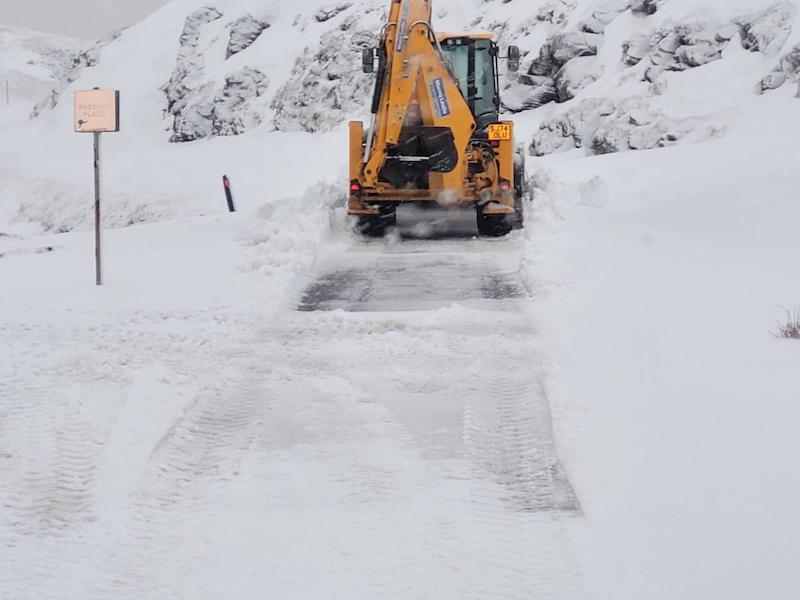
The Highland Council has paid tribute to its staff and local communities after a prolonged spell of severe winter weather caused widespread disruption across the region from 1st of January.
The response included major efforts to reopen key routes such as the Bealach na Bà, which reopened on Wednesday 14th of January after being closed since New Year’s Day.
Council gritting teams worked continuously through the worst conditions, clocking more than 25,000 operating hours to keep the Highland road network moving.
The network is the longest of any local authority in Scotland, spanning more than 4,000 miles of roads across urban, rural, and remote communities.
At the height of the weather, more than 200 operatives and 120 gritter lorries were deployed, supported by 15 local contractors.
Amber and yellow weather warnings covered much of the region for over a week as heavy snow, strong winds, and freezing temperatures combined to create prolonged disruption.
Caithness, Sutherland, Easter Ross, Wester Ross, and Skye were among the areas most severely affected, with overnight temperatures falling to -11 in some locations.
The conditions led to multiple road closures, significant impacts on traffic and public transport, and disruption to waste collection services.
Schools were also affected, with widespread closures as the new term began on Wednesday 7th of January.
Alongside operational work on the ground, the council focused heavily on public communication throughout the period.
More than 200 social media updates were issued between 31st of December and 11th of January, alongside daily reports on road conditions and school closures shared each morning and carried by national media outlets.
Attention is now turning to recovery work, including replenishing grit bins, inspecting roads for damage caused by freeze and thaw cycles, and checking watercourses for blockages from snowmelt debris.
Highland Council Convener Bill Lobban said:
“Since the 1st of January severe winter weather has caused significant disruption across all parts of our region.
“This has brought challenges for everyone who lives in Highland, especially at a time following the holiday period, when so many people were returning to work and school.
“Firstly, our roads teams have been working from the small hours into the late evenings to keep our road network open in the most hazardous of conditions.
“We should never underestimate the skill, dedication and courage required to carry out these duties, and these workers deserve our appreciation, recognition and praise.”
Lobban said staff across the council worked together to support communities, from street cleaning teams gritting footpaths to waste crews topping up grit bins.
He added that teachers and transport operators faced difficult decisions on school openings and bus services, decisions he said were trusted and respected in the interests of safety.
“The commitment and resilience shown by our staff, alongside the efforts of our crofters and farmers, local volunteers and partner agencies, has been outstanding.”
He acknowledged that not every road and pavement could be treated as quickly as residents would like, but said winter maintenance policies and priority routes are reviewed regularly.
Lobban concluded by thanking residents who checked on neighbours and supported local volunteer efforts, saying these actions embodied the spirit of the Highlands.


