

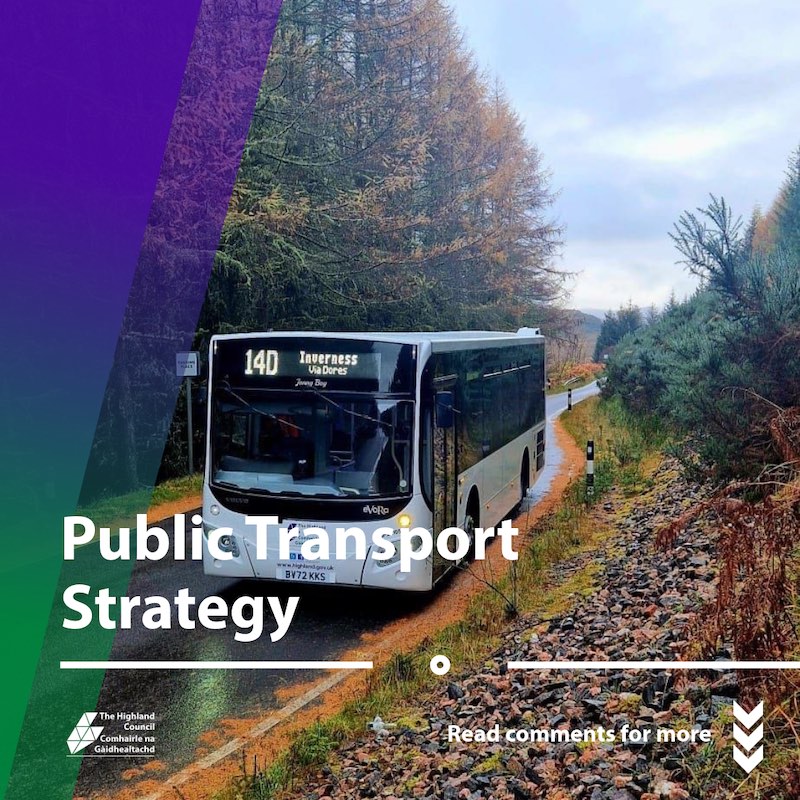
The Highland Council is preparing to launch an ambitious new ten year public transport strategy aimed at improving connectivity, affordability and sustainability across the Highlands.
The draft Public Transport Strategy for 2026 to 2036 will go before councillors on the Economy and Infrastructure Committee next week and sets out plans to modernise public and community transport services across one of the largest and most geographically challenging regions in Europe.
The proposed strategy follows agreement of the Local Transport Strategy Delivery Plan earlier this year and comes as councils across Scotland continue facing rising transport costs, shrinking commercial bus networks and changing travel habits.
Central to the new strategy is a stronger role for council owned transport services alongside closer integration between buses, ferries and community transport.
Chair of the Economy and Infrastructure Committee, Councillor Ken Gowans, said:
“This draft strategy sets out a bold and forward looking vision for public transport across the Highlands.
“It acknowledges the challenges we face, while clearly identifying the opportunities to strengthen connectivity, reduce emissions and deliver services that meet the evolving needs of our communities.
“Public consultation will be a crucial next step in shaping a transport system that is inclusive, resilient and fit for the future across our diverse Highland area.
“The introduction of a significant number of new routes by The Highland Council, alongside the strategic move to bring transport businesses into Council ownership, marks a step change in our approach.
“Together, these investments are laying strong foundations for a more reliable, integrated and community focused public transport network for the Highlands.”
The draft strategy is built around five key priorities including improving access for communities, creating better transport links and interchanges, delivering more direct and reliable bus routes, introducing fairer fares and accelerating the move towards lower emission transport fleets.
Among the proposals being explored are expanded support for rural transport services, greater use of flexible demand responsive transport systems and extending free under 22 ferry travel.
The strategy also highlights the importance of improving infrastructure including bus shelters, stops, mobility hubs and integrated transport interchanges to encourage more people to use public transport.
Particular focus is being placed on improving access to employment, healthcare, education and essential services in rural and remote communities where transport links can often dictate daily life.
The council also plans to work more closely with partners including NHS Highland to better coordinate transport resources and services across the region.
If approved next week, the draft strategy will move into a wider public consultation process before a final version is adopted.
For many communities across the Highlands, where distance and geography remain constant challenges, the success of the strategy could play a major role in shaping how people live, work and travel over the next decade.


