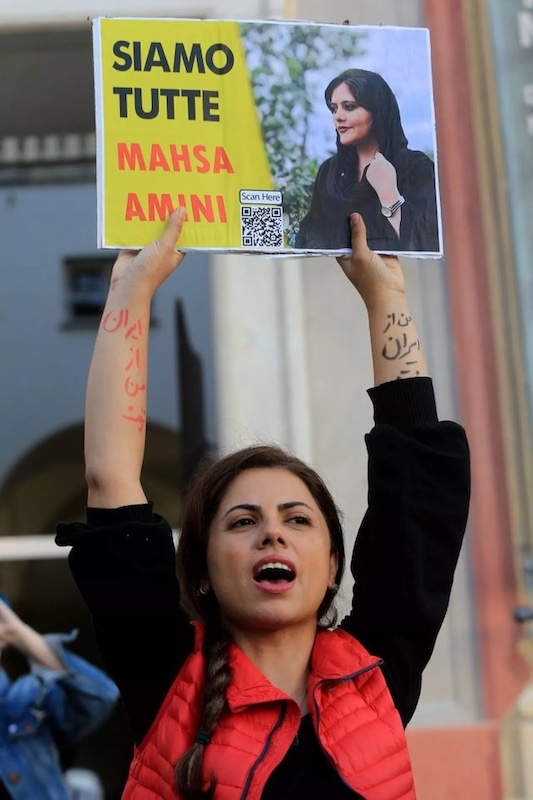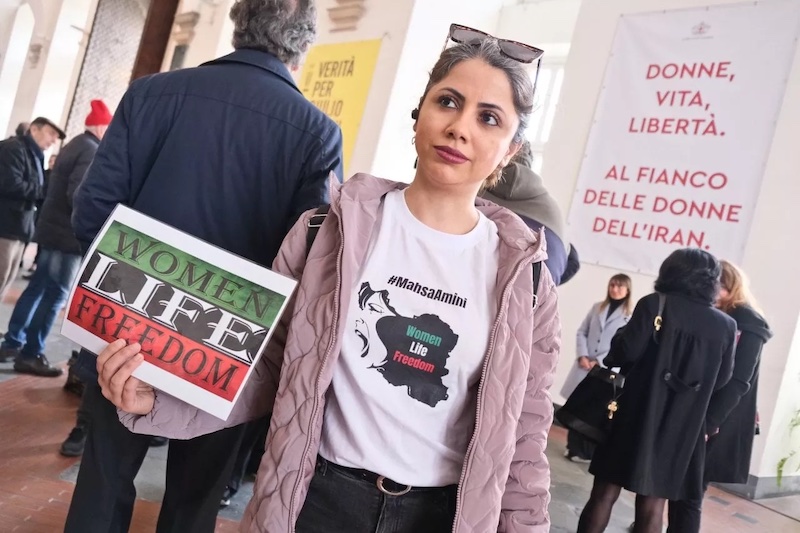

An Iranian woman now living in the Scottish Highlands has spoken out about a rapidly unfolding humanitarian crisis in Iran, as economic collapse, mass protests, and a nationwide communications blackout leave families cut off and fears growing over the scale of state violence.
Zara Jalilian, a human rights activist whose family remains in Iran, says the situation changed overnight on the 27th of December when the Iranian currency collapsed, with the exchange rate falling to around £1 to 1,927,000 Iranian rials.
She says the sudden devaluation pushed millions of people into immediate hardship, leaving families unable to afford basic food, medicine, and essentials, while traders and shopkeepers across Tehran and other cities began strikes and protests in response.
As demonstrations spread, Zara says images and videos of repression began to circulate, before the authorities moved to silence the country entirely by imposing a nationwide internet and phone shutdown on the 7th of January.
Since then, she says contact with people inside Iran has become almost impossible, including communication with her own family, leaving those outside the country reliant on fragments of information and deeply worrying reports.
“Since then, we have had almost no communication with people inside Iran, including our own families.”
Despite the blackout, Zara says deeply disturbing images have still emerged, including footage of bodies, shared through limited internal sources, eyewitness accounts from people who managed to leave Iran, and a small number of connections that briefly accessed satellite internet.
She says those connections now appear to have stopped as well.
According to multiple human rights organisations, more than 2,000 protesters are believed to have been killed during the current crackdown, figures which Zara says echo a grim and familiar pattern.
“In 2022, during the Woman, Life, Freedom movement following the killing of Jina Mahsa Amini, nearly 700 people were killed.
“In November 2019, during another internet blackout, 1,500 protesters were killed in just three days.”
Zara says she was in Iran during the 2019 protests and witnessed the violence firsthand in the streets.
“Each time the country faces a major crisis, the state responds by killing its bravest and most courageous citizens.”
What adds to the pain, she says, is the response from outside Iran, with many European governments continuing negotiations with the Islamic Republic rather than taking a clear stand with the Iranian people.
“These policies, intentionally or not, prolong the life of a violent dictatorship.”
Now living in the Highlands, Zara says the physical distance from Iran only deepens the sense of responsibility she feels to speak while others are being silenced.
“As an Iranian woman, a human rights activist, and a resident of the Scottish Highlands living far from my family, I feel a deep responsibility to speak out.
“While the internet is available to me here, people inside Iran are being deliberately silenced.”
Zara says the demand from protesters is no longer reform but an end to the Islamic Republic itself, with many believing they have already lost their future.
“I do not know when the internet will be restored.
“I do not know whether my family and friends who are protesting are safe.
“I do not know how many more lives will be lost.
“But I do know this.
“The Iranian people will never forget those who stood with them and they will never forget those who stood with their oppressors.”