

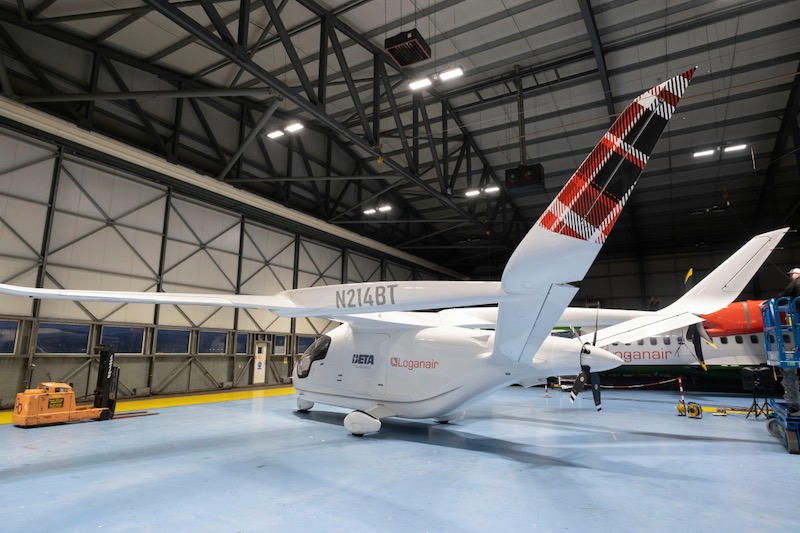
Loganair has made aviation history by completing the first all electric flight by a commercial airline across its network, marking a major step forward for low emission air travel.
The UK’s largest regional airline carried out the milestone flight from Glasgow to Dundee on Thursday the 19th of March, using BETA Technologies’ ALIA CTOL aircraft, a battery powered fixed wing plane.
The flight forms part of a two week programme that will see the aircraft operate across Loganair’s network, demonstrating how zero emission aviation can support freight, mail and essential supplies including medical deliveries.
The trial represents a significant move towards decarbonising short haul aviation, with Scotland positioned at the centre of testing next generation aircraft in real world conditions.
Loganair chief executive Luke Farajallah said:
“This is a landmark day for European aviation, and in particular for Scotland’s airline Loganair.
“We are not talking about concepts, prototypes, or distant ambition, this is a real tangible programme of flying across our network which will provide invaluable data on how an electric aircraft could perform in a real commercial environment.”
Mr Farajallah said electric aircraft could transform regional flying by maintaining vital connections while reducing emissions.
“For regional airlines, the route to net zero must be practical, affordable, and operationally viable,” he said.
The programme builds on wider efforts to reduce aviation emissions, including fleet modernisation, improved operational efficiency and the exploration of sustainable aviation fuels.
Industry leaders have welcomed the development, with Airlines UK chief executive Tim Alderslade describing the flight as a world first that highlights real progress in reducing aviation’s environmental impact.
First Minister John Swinney said the trial places Scotland in a strong position to lead in cleaner aviation while maintaining essential links for remote communities.
“This next generation technology ensures that Scotland is well placed to play a leading role in reducing the carbon emissions associated with aviation, while supporting regional connectivity for communities in the Highlands and Islands.”
The UK Civil Aviation Authority has authorised the demonstration flights, with officials saying the trials will help shape future regulation for electric aircraft and advanced air mobility.
Sophie O’Sullivan, Director of Future Safety and Innovation, said electric aviation offers the potential for cleaner, quieter and more reliable flights.
The UK Government has also backed the move, with Aviation Minister Keir Mather pointing to wider investment aimed at supporting green aviation technologies and economic growth.
Airports involved in the programme, including Glasgow and Aberdeen, say the trials demonstrate the practical potential of electric aircraft for essential services such as mail delivery.
Fiona Smith, Sustainability Director at AGS Airports, said the development represents a major opportunity to cut emissions while strengthening connectivity.
The successful flight marks a milestone for the aviation industry, with electric aircraft moving from concept to real world operation as part of the push towards net zero.
Loganair’s trial signals a shift in how short haul aviation could operate in the future, combining environmental ambition with the need to maintain lifeline services across Scotland.


