Scotland’s ambulance service is receiving a welcome boost ahead of winter, with up to 280 newly qualified paramedics joining teams across the country as part of a £4 million investment in frontline care.
The new recruits will strengthen the Scottish Ambulance Service at a time when emergency crews traditionally face some of their busiest and most demanding months.
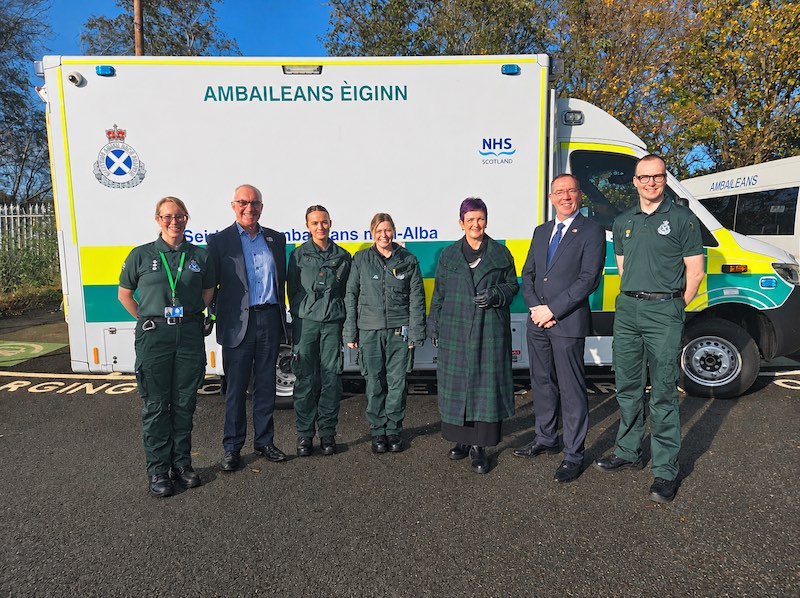
Health Secretary Angela Constance visited Livingston Ambulance Station on Monday 9 November to meet some of the new staff and see the latest additions to the service’s vehicle fleet.
She was joined by Scottish Ambulance Service Chief Executive Michael Dickson and Chairman Tom Steele as the organisation outlined its preparations for the months ahead.
The investment is intended to increase staffing levels, strengthen operational resilience and ensure ambulance crews can continue responding to emergencies across Scotland’s mainland and island communities.
Alongside the recruitment drive, the service has welcomed 190 replacement vehicles since April, including emergency ambulances and patient transport vehicles.
Of these, 130 form part of a £133 million Scottish Government fleet replacement programme which will deliver more than 1,000 new and improved vehicles over five years.
For a service responding to more than 1.5 million calls for assistance annually, additional staff and reliable vehicles are essential to maintaining emergency cover.
Scottish Ambulance Service Chief Executive Michael Dickson said:
“These newly qualified paramedics are a great boost to our service ahead of what can be our busiest months.
“Our continued ambition, supported by the Scottish Government, is to grow and develop our workforce.
“Alongside investment in our new replacement fleet, this will strengthen our teams, increase resilience and help us provide the best possible care across Scotland.
“As we head into winter, the public can also help by using the right service.
“If you need urgent care but it’s not life-threatening, visit your local pharmacy, go online to NHS Inform, call NHS 24 on 111 or visit your GP.
“This will help keep our ambulance crews available for those facing the most serious emergencies.”
The Scottish Ambulance Service employs more than 5,000 staff, providing emergency care and patient transport to communities throughout the country.
Its crews respond to more than 600,000 emergency and unscheduled incidents each year, while the Patient Transport Service makes around one million journeys taking patients to and from hospital.
The organisation also operates air ambulance services, carries out transfers between hospitals and receives support from more than 1,200 volunteers, including community first responders.
Health Secretary Angela Constance said:
“Ambulance staff have shown outstanding resilience in the face of sustained pressure and I want to thank them for their continued dedication and hard work.
“We are working hard to provide the Scottish Ambulance Service with the staff and resources it needs to continue delivering a high-quality emergency service to people across Scotland.
“I recognise the vital contribution that newly qualified paramedics make and our £4 million investment is helping more successful applicants secure employment.
“This is helping bring workforce levels to a record high and supporting our NHS as we enter into winter.
“The fleet replacement programme highlights our commitment to investing in our health service and will deliver more than 1,000 new and improved vehicles over five years, ensuring crews have the modern and reliable equipment which they need.”
The recruitment programme comes as Scotland’s health services prepare for increased winter demand, with ambulance crews playing a vital role in responding to emergencies and supporting patients in communities far from major hospitals.
For rural and island communities, where journeys to hospital can be lengthy and emergency resources must cover considerable distances, maintaining a dependable ambulance service is particularly important.
The arrival of new paramedics and investment in replacement vehicles represent further steps towards strengthening that service, although continued recruitment and operational support will remain essential as demand grows.