

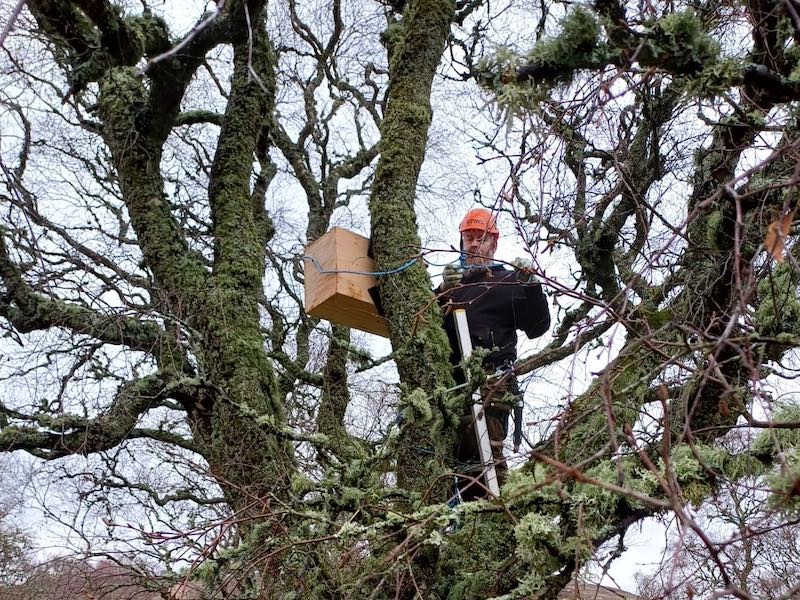
Nationally declining bird species are being given a boost in Glen Prosen through the installation of new nesting boxes across the glen.
Forestry and Land Scotland has erected boxes for kestrels, barn owls and dippers, three species whose numbers have fallen over time.
The work forms part of a Nature Restoration Fund supported partnership with the River South Esk Catchment Partnership in the Angus Glens.
FLS Environment Forester Gareth Ventress said the move reflects a wider effort to enhance habitats across the land it manages.
“The forest and land we manage is home to and supports some of Scotland’s most iconic species along with many other important ones.
“That is why we manage our land with the aim of creating and enhancing specialist habitats for a wide range of species.
“In Glen Prosen we are restoring riparian woodland and creating new native woodlands.
“This process will take time so while these new habitats develop, the nest boxes will provide kestrels, barn owls and dippers in the area with a safe and suitable place to breed.
“More avian predators like kestrel and barn owls will help to reduce vole populations that can damage young trees at woodland creation sites.”
Kestrels and barn owls do not build their own nests and often depend on tree cavities or holes in walls, while dippers nest close to water in riverbanks and sheltered gaps in stonework or trees.
As riparian woodland becomes established along the river, it is expected to provide longer term habitat for these birds and other wildlife.
The developing woodland will also help shade the river, while fallen leaves will add nutrients that support freshwater species such as salmon and brown trout.
Tree roots are expected to stabilise riverbanks during periods of high flow, helping to reduce erosion.
Extensive surveys carried out between 2022 and 2025 have provided detailed data on wildlife, soils, water and vegetation in the glen, guiding restoration work and long term land management.
A summary of the recent survey results can be found here: FLS Glen Prosen: Summary of Baseline Surveys undertaken 2022 to 2025
The nesting boxes are seen as an early intervention while the wider habitat restoration programme continues.


