

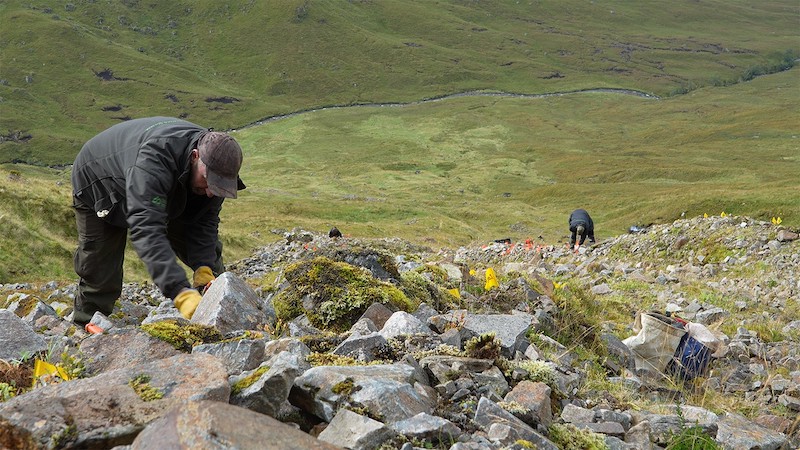

On a steep stony hillside in Glen Affric, one of Britain’s rarest ferns has been given a fresh chance to survive.
Staff from Forestry and Land Scotland and the Royal Botanic Garden Edinburgh have planted 250 oblong woodsia on a scree slope high above the glen in a carefully planned conservation effort.
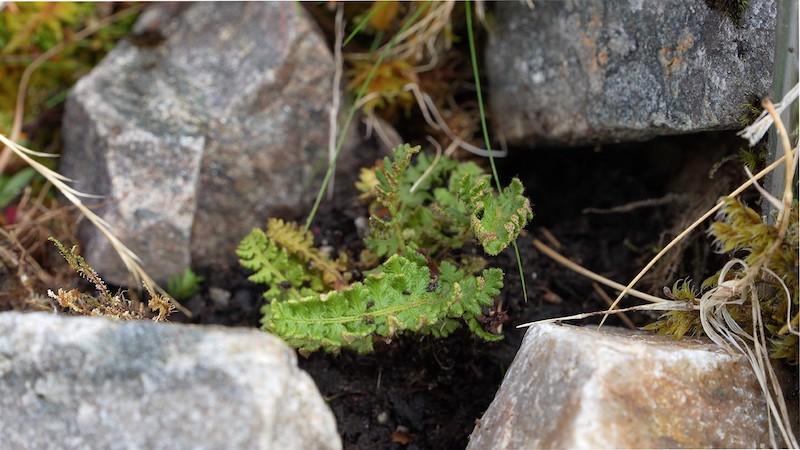
The small alpine fern, known formally as Woodsia ilvensis, was almost wiped out in the nineteenth century during the Victorian obsession with collecting ferns, a craze known as pteridomania.
Today it remains under pressure from habitat fragmentation and climate change, leaving only scattered and fragile populations across Scotland.
The work in Glen Affric forms part of the Royal Botanic Garden Edinburgh’s Scottish Plant Recovery Project, a science led initiative aiming to boost the numbers and spread of ten threatened native plants.
Glen Affric has already been chosen as a restoration site for several other vulnerable species, including wild apple and a potentially resistant wych elm population.
FLS Forester Sam Brown said:
“Over the last two years we have been working closely with the RBGE on its Scottish Plant Recovery Project to help kick-start the recovery of some of Scotland’s native tree and plant species.
“Oblong woodsia is the third species we have planted in Glen Affric so far.
“FLS worked with the project team from the RBGE to plant the alpine ferns high on one of the glen’s scree slopes at around 650 metres, making for an interesting day’s planting.
“We will be monitoring this new population in conjunction with RBGE.
“It would be fantastic to see them establishing and self-regenerating and once more growing across Scotland after being on the brink of extinction.”
To build up enough stock for reintroduction, the RBGE propagated thousands of ferns in its nursery before planting them at nine carefully selected sites across Scotland.
RBGE Scottish Native Plant Conservation Horticulturist Erin O’Hare said:
“This fern is so fragile in nature that finding the right place to try and plant them is very challenging.
“We landed on nine sites that were selected for their scree habitat with low competition but also with considerable variation in humidity, altitude, aspect, and base rock.
“As is the case with many endangered rare plants, their preferred growing conditions are still debated and undergoing research.
“There is no certainty around the ideal conditions for Woodsia ilvensis so our plantings also act as trial work for the Woodsia’s environmental requirements.
“We will return to the sites, including Glen Affric, next year, to monitor these ferns and even though its early on in their establishment, we will be able to get an indication of what conditions are most successful.”
For now, the fragile green shoots on that Highland hillside represent quiet determination, careful science and a belief that even the rarest species deserve another chance.


