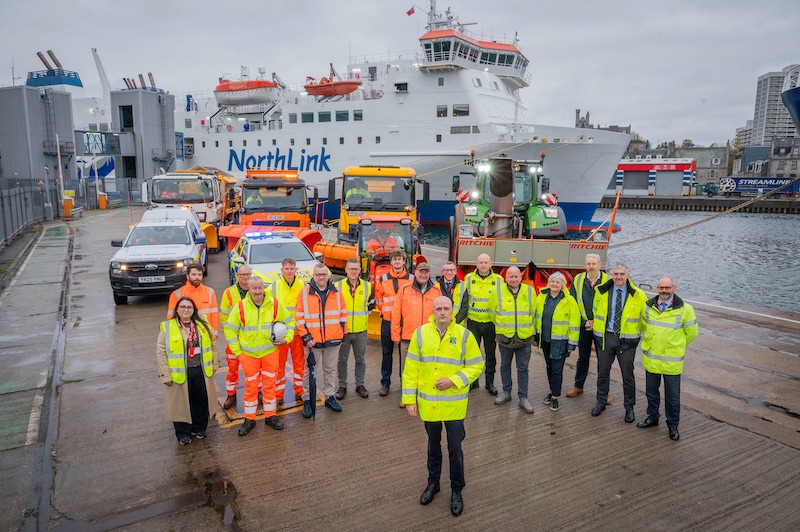
Scotland is preparing for another challenging winter, with around £20 million being invested to help keep roads, railways and ferry services operating when severe weather strikes.
Transport operators, emergency services and resilience partners gathered at Aberdeen’s NorthLink Ferries terminal to outline the preparations being made across the country.
The Scottish Government says around 240 gritters will be available to patrol the trunk road network, operating from approximately 40 depots to spread salt and clear snow.
Scotland currently has around 447,000 tonnes of salt available, more than was used throughout the whole of last winter.
Rail operators are also preparing for difficult conditions, with a dedicated weather desk operating around the clock and specialist equipment, including snow ploughs and a helicopter, available when required.
Ferry operators will continue monitoring weather forecasts and assessing possible disruption, with particular attention given to maintaining essential supplies to island communities.
The preparations follow Storms Austen and Boelo, which have already demonstrated the challenges severe weather can bring to Scotland’s transport network.
Cabinet Secretary for Economy, Tourism and Transport Stephen Flynn said:
“We have already seen the impact of severe weather in recent weeks through Storms Austen and Boelo, so preparing for challenging conditions over the months ahead is vitally important.
“It was encouraging to hear first-hand from operators about the work that takes place throughout the year to ensure we are ready to respond when severe weather arrives.
“The Met Office’s named storm process and Traffic Scotland’s gritter tracker have helped raise awareness of the challenges we face, but the travelling public also has an important role to play.
“Whether it is motorists planning ahead and making sure their vehicles are winter ready, or people using rail and ferry services checking for updates before they travel, everyone can help make journeys safer and more reliable.
“While severe weather has traditionally been associated with winter snow and ice, climate change means we are increasingly experiencing heavy rain and high winds throughout the year.
“It is important that we continue to work together to meet these challenges and keep Scotland moving.”
For Scotland’s island communities, reliable ferry connections remain particularly important during periods of prolonged disruption.
Kris Bevan, Operations Director for Serco NorthLink Ferries, said:
“Keeping our island communities connected is at the heart of everything we do.
“Winter weather can present significant challenges, but through careful planning, a strong focus on operational resilience and the professionalism of our crews and shore teams, we work hard to maintain lifeline services whenever it is safe to do so.
“We also recognise that our vessels provide a crucial link for resilience partners.
“Ensuring they can access the Northern Isles when required is a responsibility we take seriously, and we are proud to work alongside partners across Scotland to help keep communities connected, supported and moving throughout the winter months.”
Craig Gorman, head of operational weather strategy at Network Rail, said:
“Winter brings some of the toughest conditions for Scotland’s railway, and preparation starts long before the first snow falls.
“Our in-house meteorologists closely monitor the forecast so we can plan where people and equipment will be needed, while teams across the country prepare the railway for freezing temperatures, heavy rain and high winds.
“When snow arrives, we can deploy snow ploughs to help clear routes, working with train operators and Transport Scotland to keep trains moving wherever conditions allow.”
The importance of cooperation between transport authorities was demonstrated in Aberdeenshire last winter, when additional equipment was brought in to tackle particularly severe conditions.
Alan Wood, Director of Environment and Infrastructure Services at Aberdeenshire Council, said:
“The scale and persistence of the extreme winter weather we experienced in January placed unprecedented demands on our services.
“Five amber weather warnings arrived in rapid succession, bringing very heavy snowfall, prolonged freezing temperatures and challenging conditions across Aberdeenshire.
“The importance of mutual aid during such severe weather events cannot be overstated.
“It enabled us to access additional specialist resources and equipment which would otherwise not have been available, including major snow-clearing machinery from Amey, a snow cutter from Tayside Contracts and additional equipment from neighbouring councils which were less impacted by the conditions.
“As we look ahead to future weather events, maintaining and strengthening these mutual aid arrangements will remain essential to ensuring we can respond quickly, effectively and resiliently to protect our communities.”
Police Scotland is urging the public to take weather warnings seriously and avoid unnecessary risks when conditions deteriorate.
Chief Inspector George Nixon said:
“Resilience structures in Scotland bring together a multi-agency approach from a national level to local partnerships to prepare, respond and recover from incidents such as severe weather.
“Our officers and staff will continue to support communities to keep people safe, working hard in what can be extremely challenging and difficult conditions.
“Everyone can play their part in being prepared for severe weather by planning ahead, listening to travel advice and checking for road closures or wider travel disruptions.
“There is lots of information available through the Ready Scotland website on steps you can take to prepare for emergencies or severe weather as well as information from agencies such as the Met Office, SEPA and your local authority.
“Our message is clear, during severe please listen to the advice, be prepared and don’t put yourselves or others at risk.”
Simon Brown, Met Office Managing Director of Products and Services, said:
“Winter weather can bring significant challenges to Scotland’s transport network, so preparation and close collaboration are vital.
“The Met Office works with Transport Scotland and partners to provide the weather information and warnings they need to prepare for and respond to potentially disruptive conditions.
“For the public, checking the latest forecast and weather warnings before travelling is a simple but important step in staying safe and prepared this winter.”
With winter approaching, the message from Scotland’s transport and emergency services is straightforward: check the forecast, prepare properly and make safety the priority before setting out.