

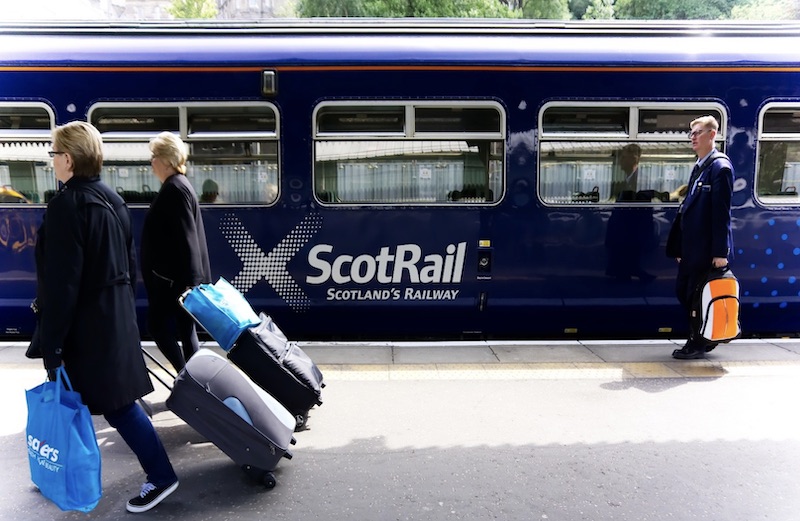
ScotRail will introduce a new £10 minimum fare for passengers who deliberately board trains without buying a ticket, in a move aimed at reducing fare evasion across Scotland’s Railway.
Fare evasion is estimated to cost more than £11 million each year, money which the operator says could otherwise be reinvested into services.
Under the new policy, passengers who intentionally travel without a valid ticket will be charged a £10 minimum fare.
In many cases this will exceed the cost of a standard ticket, particularly on short journeys.
For example, a return ticket from Bishopbriggs to Glasgow Queen Street costs £3, meaning someone who purposefully boards without purchasing in advance would face the £10 minimum charge instead.
Where the normal ticket price exceeds £10, there will be no additional charge beyond the standard fare.
However, customers must still buy before boarding to qualify for discounted travel options.
Independent analysis of ticketless travel found that 74 per cent of those who boarded without a ticket had access to an open ticket office at the time, while 90 per cent had access to a working ticket vending machine but chose not to use it.
ScotRail believes the change may also help reduce anti-social behaviour, which it says is often linked to a minority travelling without tickets.
There are several exemptions to the new policy.
Customers holding a national entitlement card will not be subject to the minimum fare.
It will also not apply where a station ticket office is closed, where there is no ticket office or ticket vending machine, or where a customer has a registered disability preventing use of ticket machines.
Passengers paying by cash can obtain a promise to pay ticket from a vending machine and complete the purchase on board.
A period of customer education will run from 1 April 2026 until July 2026, after which the £10 minimum fare will be fully enforced. Revenue Protection teams will focus on routes where short journey claims are most common.
Since returning to public ownership in 2022, ScotRail has expanded its Revenue Protection team and introduced enhanced reporting systems and updated on-train equipment for frontline staff.
The operator says ticketless travel has fallen from 8.8 per cent in April 2022 to 3.7 per cent.
Phil Campbell, ScotRail Customer Operations Director, said:
“The introduction of a minimum fare will target the small number of customers who don’t buy a ticket before they travel, ensuring fairness for honest, fare-paying ScotRail passengers.
“Every pound lost through fraudulent travel is money that would have been reinvested into the railway, and we will take robust action to deal with those purposely avoiding payment.
“With more staff in place across the network, increased checks at stations, and the use of enhanced data analysis, we are reducing instances of ticket fraud year-on-year.
“Everyone across Scotland’s Railway will continue to work hard to ensure that everyone who uses our services pays their fair share.”
Cabinet Secretary for Transport Fiona Hyslop said:
“The recent fares freeze has been implemented to help people with the cost of living while ensuring ScotRail services are sustainable in the longer term and has been supported by Scottish Government funding.
“While around 95 per cent of passengers already travel with a valid ticket, it is only right that ScotRail can take action against those who seek to avoid doing so.
“With a number of measures already in place, this minimum fare policy will act as a further deterrent to those who try to purposely evade paying for a ticket.
“This approach seeks to protect the significant investment being made in Scotland’s Railways, while also allowing for a period of customer education regards the new policy.”


