

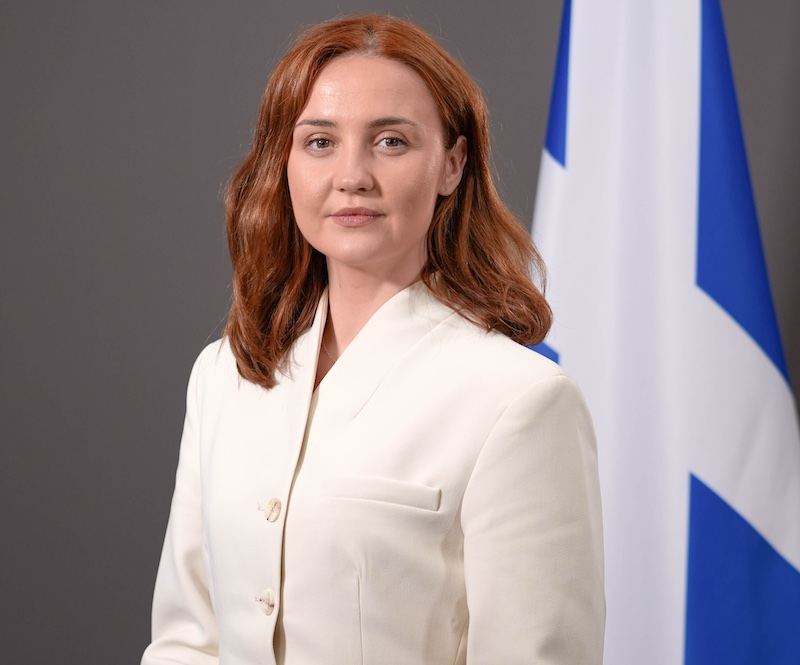
Scotland’s Culture Secretary Màiri McAllan has called on broadcasting regulator Ofcom to examine the BBC’s plans to close its dedicated BBC Scotland television channel, describing the proposed closure as wholly unacceptable.
In a letter dated 28 October 2026, McAllan warns that removing the channel, launched in 2019, would diminish Scottish news and cultural programming, particularly with the proposed loss of the News at Seven programme.
She also raises concerns about the accessibility of television services, disparities in BBC investment across the UK and whether Scottish audiences will have an opportunity to express their views before the changes proceed.
The Cabinet Secretary has asked Ofcom to explain how it intends to review the decision and any implications for the BBC’s operating licence.
Her letter to Ofcom Chief Executive Melanie Dawes and Director for Scotland Glenn Preston is reproduced in full below.
Dear Melanie and Glenn,
I write regarding the BBC’s intention to close the linear BBC Scotland television channel.
In view of the significance of this change for audiences in Scotland, I must convey the Scottish Government’s concerns and raise with you its potential impact. I raise all of this in the context of the importance we place upon the preservation of a public service broadcasting ecosystem that reflects Scotland’s needs.
In short, the Scottish Government considers the proposed closure of the linear BBC Scotland channel to be wholly unacceptable, and we oppose such a move in the strongest possible terms.
The establishment of the BBC Scotland channel in 2019 was an important strengthening of Scotland-specific broadcasting provision. Through its dedicated Scottish news, current affairs, sport, culture, entertainment and drama, it was established to provide audiences with a distinctive platform reflecting Scotland as a nation with communities, experiences and stories that are unique within the UK. The loss of the linear channel risks utterly undermining this and will reverse progress in improving the visibility and representation of Scotland within the UK’s broadcasting landscape.
While audience habits continue to evolve and we understand that broadcasters must adapt to changing patterns of consumption, public service broadcasters retain a unique responsibility to ensure that their services remain accessible and relevant to audiences – not least because audiences in Scotland are paying for the same via their licence fee.
Many viewers continue to rely on linear television services, and any move away from those services risks disproportionately affecting audiences who are less likely to access content through online platforms.
Moreover, the closure of the linear BBC Scotland channel is particularly concerning for dedicated Scottish news provision. News at Seven will cease when the channel closes and, we understand, it will not move to BBC iPlayer. The loss of this dedicated Scotland-specific television news provision would represent a significant and totally unacceptable reduction in nationally relevant journalism.
The Scottish Government is also concerned about the cumulative impact of this decision alongside wider recent and anticipated reductions in broadcast and print news provision. Taken together, these changes risk further diminishing Scotland-focused journalism and reducing the visibility and accessibility of Scottish news, current affairs and public interest content. Closure of the linear channel would also be impossible to reconcile with a supposed ambition to move power and decision-making away from London and towards audiences across the UK who are paying for the service. It would send entirely the wrong signal about the BBC’s commitment to serving and representing audiences fairly across all parts of the UK.
The Scottish Government recently set out its position as part of the BBC Charter Review process. We argued that the future strength and credibility of public service broadcasting in Scotland depends upon greater authority, accountability and autonomy for BBC Scotland, alongside increased commissioning powers, stronger governance arrangements and decision-making that is closer to Scottish audiences. We also called for fairer investment and greater transparency around expenditure, commissioning decisions and the BBC’s performance in Scotland, together with stronger mechanisms through which Scottish audiences can hold the BBC to account.
These issues are particularly important given the continuing disparities in investment across the nations of the UK. The most recently reported BBC expenditure in Scotland is equivalent to only 88.8% of the licence fee income raised in Scotland, compared with 110.2% in Wales and 99% in Northern Ireland. The disparity in indigenous language broadcasting is similarly stark, with a funding gap of approximately £95 million between Welsh and Gaelic language services, reflecting BBC and UK Government funding arrangements. This year, Scottish audiences were unable to watch on BBC One as athletes and spectators from around the world gathered in Glasgow for the Commonwealth Games. These existing issues were unacceptable. To add the closure of the BBC Scotland linear channel is to render the situation entirely inexplicable.
As the independent regulator of the BBC, Ofcom must ensure that the BBC fulfils its Mission and Public Purposes and that audiences in each nation of the UK, including Scotland, are well served. We would urge you to assess the decision to remove BBC Scotland from linear television not only in terms of changing audience behaviour, but also in relation to its impact on representation, accessibility, plurality, democratic engagement, cultural expression and the wider public service broadcasting ecology in Scotland.
We recognise Ofcom’s previous consideration of changes to the regulatory requirements applying to the BBC Scotland channel, including the BBC’s request to reduce its peak-time news quota. The planned closure of the linear channel raises wider questions about how the BBC will continue to meet the needs and expectations of audiences in Scotland, and we would welcome the opportunity to engage constructively with Ofcom as it considers these issues.
Given the scale and significance of this decision, we would welcome consideration of how Scottish audiences and stakeholders can be given a meaningful opportunity to make their views known as part of any relevant regulatory process.
The people of Scotland must be able to turn on their televisions and radios and find something of their lives reflected back to them. With underinvestment of the licence fee revenues in Scotland, disparity between Gaelic and Welsh-language broadcasting, a total absence of Commonwealth Games coverage on BBC One Scotland (as just one example of Scottish cultural and sporting life) and now the closure of the BBC Scotland channel, this aim is not just under threat but all but extinguished.
With your responsibility to Scotland’s audiences in mind, I should be grateful if you would set out how Ofcom intends to review the BBC’s decision, including any implications for the BBC Operating Licence. The Scottish Government looks forward to continued close engagement with Ofcom as these changes are considered.
Yours sincerely
MÀIRI MCALLAN


