

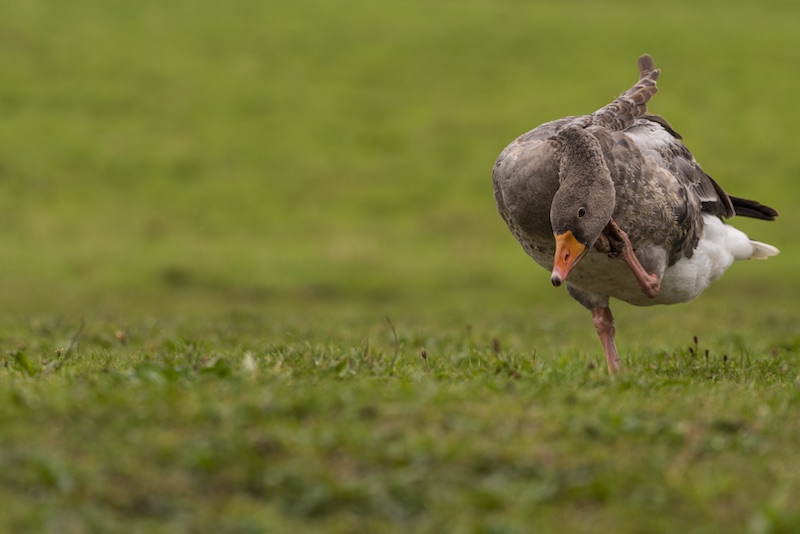

Suspected cases of avian flu have been identified among geese at a Highland nature reserve, prompting guidance from conservation staff ahead of the busy winter period.
RSPB Scotland confirmed that suspected cases of Highly Pathogenic Avian Influenza (HPAI) have been reported at Insh Marshes, with the first case recorded on 8 December.
The disease is suspected to be affecting greylag geese and a pink-footed goose at the site, with birds displaying symptoms commonly associated with avian flu.
Key signs of infection include lethargy, loss of balance, swollen head, drooping wings, twisted head or neck, closed or watery eyes, and breathing difficulties.
The reports come as Department for Environment Food and Rural Affairs raised the avian flu risk level for wild birds across Great Britain to “very high” following a rise in cases during October and November.
RSPB Scotland is urging members of the public to remain vigilant when visiting reserves and outdoor spaces over the festive period.
Anyone who encounters a dead or visibly unwell wild bird, either at Insh Marshes or elsewhere, is advised not to touch or approach the animal, to wash hands after outdoor walks, clean footwear between visits, and keep dogs on a short lead to avoid contact.
Suspected cases at Insh Marshes can be reported directly to reserve staff on 07920 818059, while incidents elsewhere should be reported to Defra via 03459 335577 or through its online dead wild bird reporting service.
Karen Birkby, Senior Site Manager at RSPB Insh Marshes, said the guidance applies well beyond a single location.
“Bird flu is not limited to one reserve or one area, and this good practice applies in any place you visit this winter where wild birds gather.
“By following the guidance, everyone can help minimise the danger to dogs and humans and help to support wildlife through this winter.”
Avian flu has had a significant impact on bird populations in recent years, with cases confirmed last winter in waterfowl, gulls and birds of prey across Scotland.
During the 2021 to 2022 outbreak, at least 13,200 barnacle geese from the Svalbard breeding population died, representing around a third of the population, which has since begun to recover but now faces renewed pressure as cases increase again this winter.
More information on Avian Flu can be found on the RSPB’s website


