

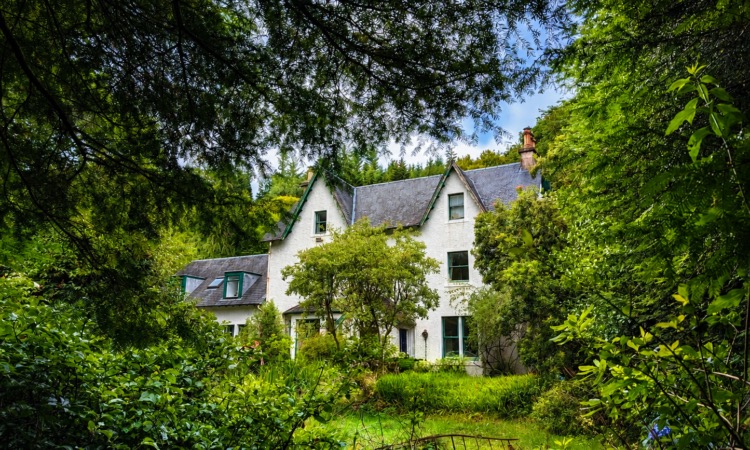
Invercoe House has watched more than three centuries of Glencoe history pass its doors, but some of that history has also happened within them.
Standing close to the mouth of the River Coe, this substantial Highland home occupies a place intertwined with the story of the MacDonalds of Glencoe, the massacre of 1692 and generations who have worked to preserve the history of one of Scotland’s most famous glens.
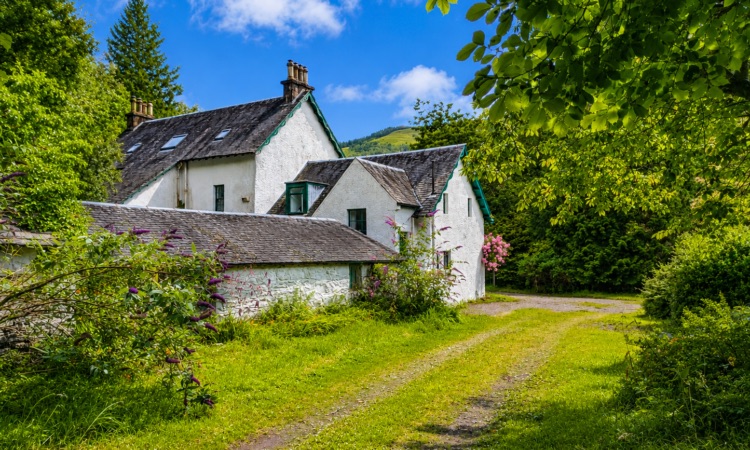
Now Invercoe House is for sale, and whoever takes possession will acquire considerably more than six bedrooms, mature gardens and a separate cottage.
They will become the latest custodian of a place with an extraordinary story.
The roots of that story stretch back beyond the present house to the MacDonalds of Glencoe and the chiefs traditionally known by the title MacIain.
Historic Environment Scotland’s records describe the 18th century Invercoe House as having Victorian alterations and possibly incorporating parts of an earlier house of MacIain, while archaeological research places the winter settlement or principal residence of MacIain at Invercoe, on the fertile ground where the River Coe reaches Loch Leven.
That distinction matters because history becomes particularly complicated around the Massacre of Glencoe, and claims about the exact locations associated with the events of February 1692 deserve to be treated carefully.
What can safely be said is that Invercoe formed part of the MacDonald landscape of Glencoe and that the site has a longstanding association with residences of the MacIain chiefs.
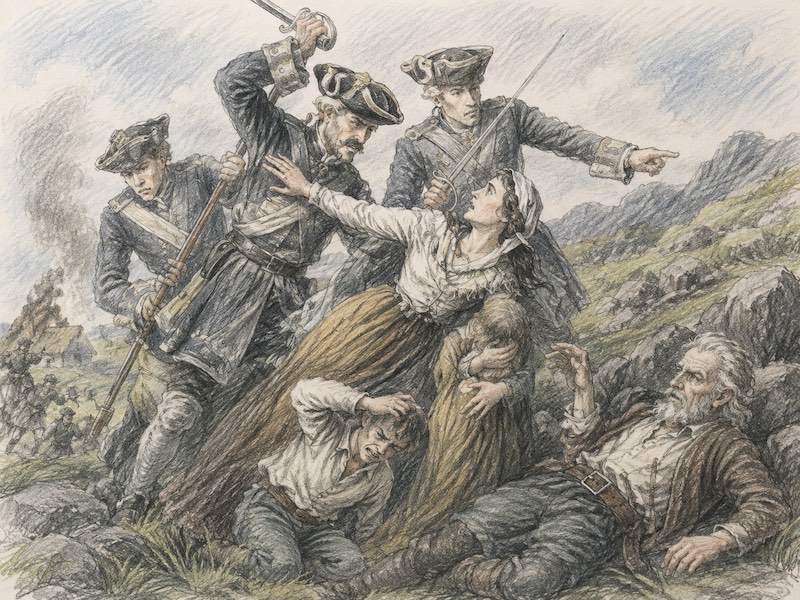
The massacre remains one of the darkest episodes in Highland history.
Government troops had been billeted among the MacDonalds for almost two weeks before members of the clan were killed in the early hours of 13 February 1692, including the elderly clan chief Alasdair MacIain.
The history did not end with the massacre.
Research into the site suggests a new house was constructed by John MacDonald, son of the murdered chief, in 1708, before that building was destroyed in the aftermath of the Jacobite Rising of 1745.
Clan Donald records also describe Invercoe House as being thought to stand on the site of MacIain’s residence at the time of the Forty Five.
The house standing today dates from the 18th century, with the selling agents giving its construction as around 1785.
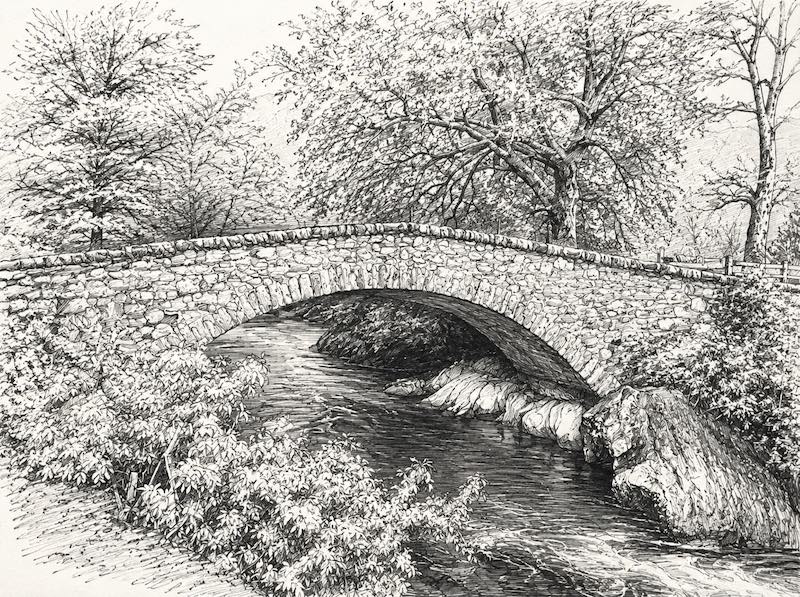
The bridge across the River Coe leading towards Invercoe House is also recorded as dating from 1785, providing a physical link with the landscape in which the present house emerged.
By the middle of the 19th century, another intriguing resident appears in the records.
Historian David Alston’s research identifies Robert Sutherland junior as tenant of Invercoe House and farm by the time of the 1851 census, living there with his unmarried sister Henriette.
But another resident would forge an even more visible connection between Invercoe House and the memory of 1692.
Ellen Burns MacDonald lived at Invercoe during the 19th century and was a descendant of the MacDonald chiefs of Glencoe.
Her connection with the massacre can still be seen in the village today.
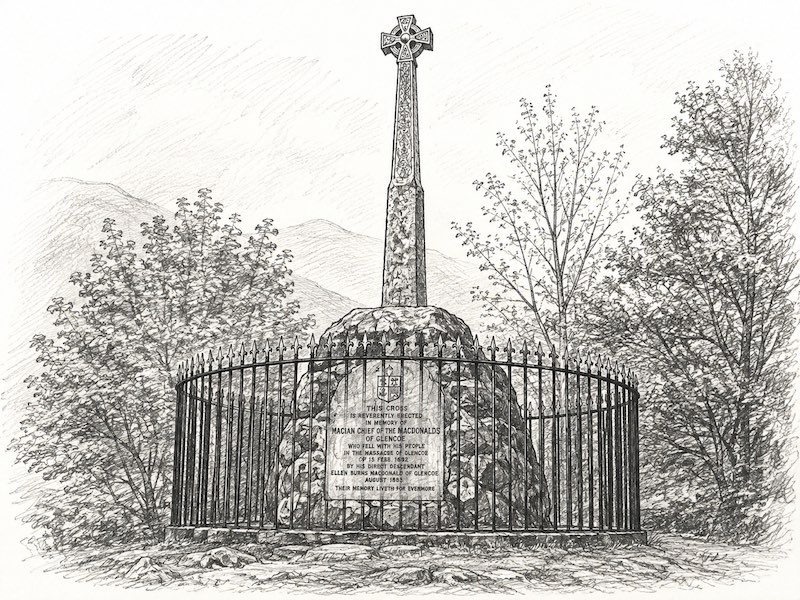
In 1883 she erected the great memorial at Upper Carnoch to MacIain and those who died with him.
Historic Environment Scotland records the memorial as having been erected by Ellen Burns MacDonald of Glencoe in memory of MacIain, whom it describes as her ancestor.
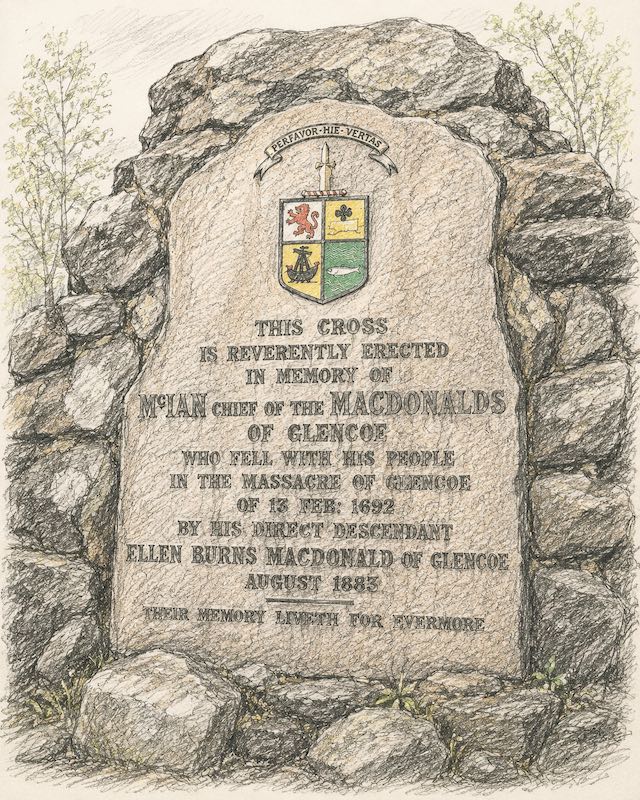
The inscription goes further, describing Ellen herself as his direct descendant.
The tall Celtic cross of dark red granite, standing above its cairn and enclosed by railings, remains one of the most powerful physical reminders of the massacre and of the determination of later generations to preserve its memory.
The MacDonalds continued to own the Glencoe Estate until 1894, when Archibald Burns McDonald put the land up for sale.
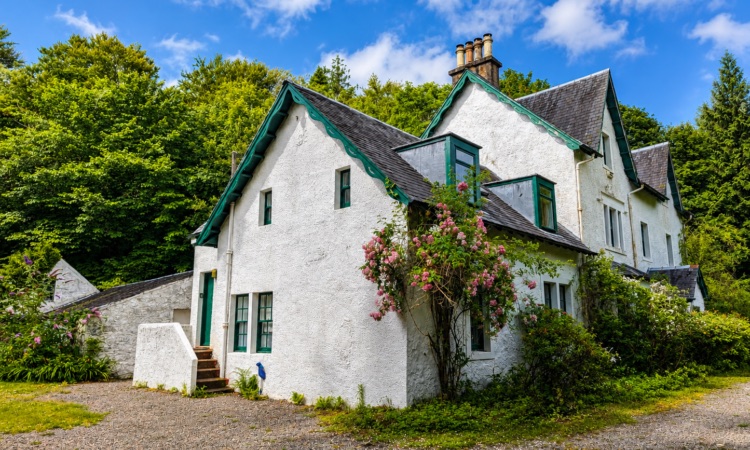
Invercoe House subsequently entered another period of change, serving at different times as estate offices and a dairy before eventually returning to private residential use.
Then, during the 20th century, another remarkable woman arrived at Invercoe.
Barbara Fairweather bought Invercoe House in 1961 and would become one of the most important figures in preserving Glencoe’s social history.
The origins of Glencoe Folk Museum can be traced to a local Women’s Rural Institute project in the 1960s, when women researching their village for a competition realised just how much local history remained undocumented.
Rather than waiting for somebody else to preserve it, they decided to do the job themselves.
The museum opened in 1967, with Barbara Fairweather among its founders, and she remained its driving force for more than three decades.
Her relationship with Invercoe House and the museum became wonderfully intertwined.
Glencoe Folk Museum records that Barbara regularly invited visitors back to Invercoe and, remarkably, that the museum collection itself was brought to the house during the winter months for safekeeping.
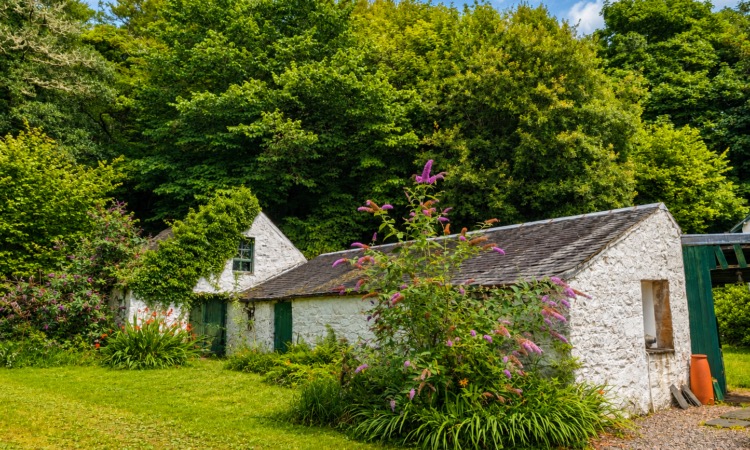
For part of every year, therefore, Invercoe House became a storehouse for the physical history of Glencoe.
Barbara also wrote extensively about Highland history, with copies of her book Highland Heritage sold directly from Invercoe House.
The connection can even be found in library catalogues today, with the National Library of Ireland recording her 1974 work on Eilean Munda as having been published by the Glencoe and North Lorn Folk Museum from Invercoe House.
The house became a gathering place too.
Clan Donald records show Barbara Fairweather of Invercoe House being made an honorary member of the Clan Donald Society in 1967, with a visitors’ book subsequently presented for use at the house.
Accounts of Clan Donald gatherings describe clansmen meeting at Invercoe, drinking coffee there, displaying the personal banners of the chiefs of Clanranald and Glengarry and later returning for ceilidhs that continued into the night.
For years Barbara also welcomed people back to Invercoe House for afternoon tea following the annual 13 February commemoration of the Massacre of Glencoe.
It is difficult to imagine a more fitting use for a house so closely associated with the historical landscape of the clan.
Barbara received an MBE for services to the arts and remained at the heart of Glencoe Folk Museum until retiring in 1999.
A portrait presented to mark her retirement showed her sitting at home in Invercoe House, surrounded by possessions, looking towards the Pap of Glencoe with her cat Amber beside her.
She died on 2 January 2001, leaving behind a remarkable legacy of preserving and sharing the history of the community she had made her home.
The present owners acquired Invercoe House in 2004 and began another chapter in its long life.
Considerable work has been undertaken to restore and upgrade the property while retaining the historic character that makes the house so distinctive.
Step inside today and that character remains unmistakable.
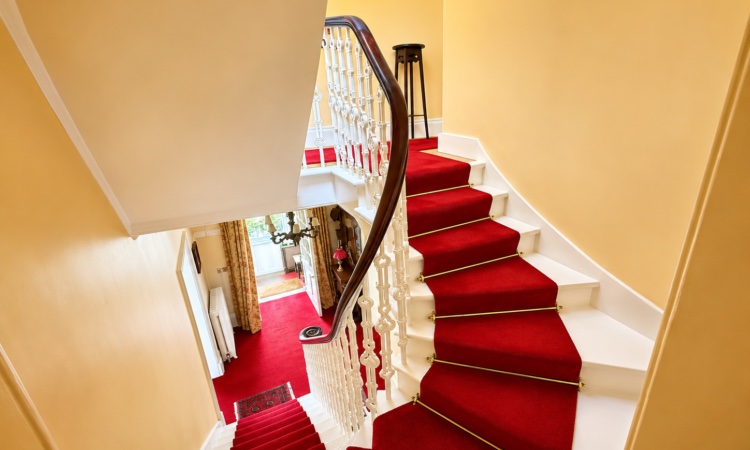
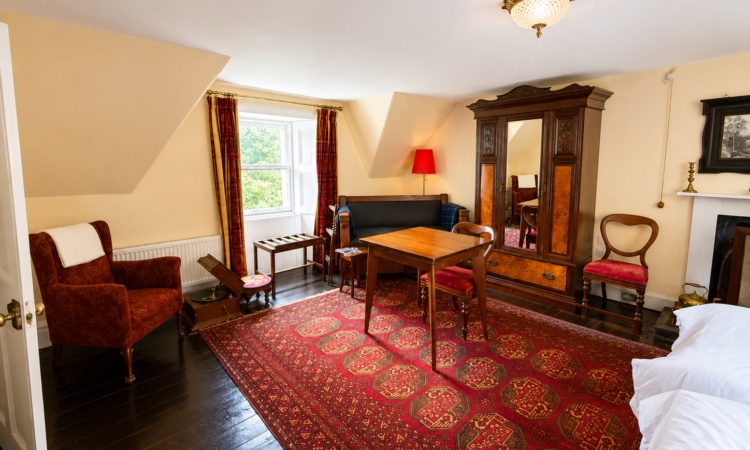
An impressive entrance hall leads to a sweeping curved staircase with ornate Victorian cast iron balustrades and a mahogany monkey tail newel post, while original plasterwork, sash windows, shutters and marble fireplaces survive throughout the principal rooms.
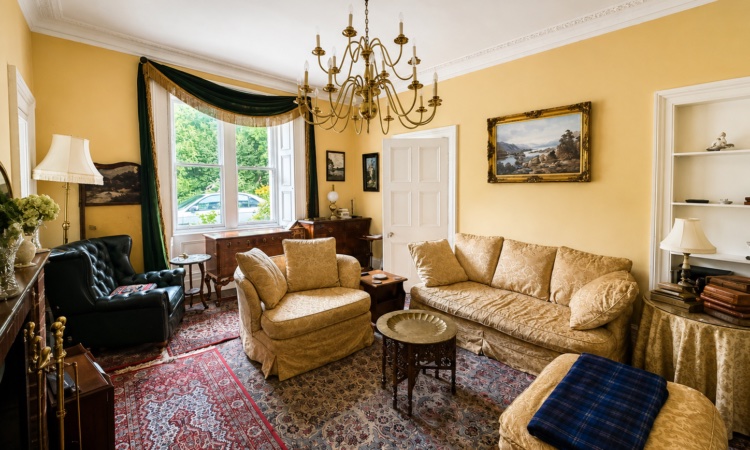
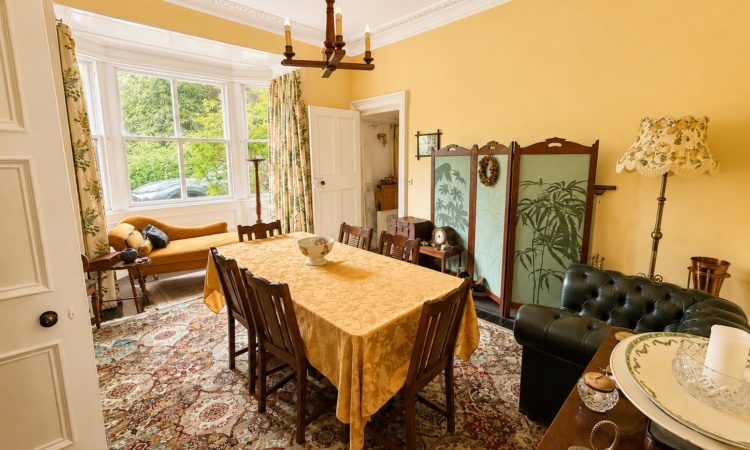
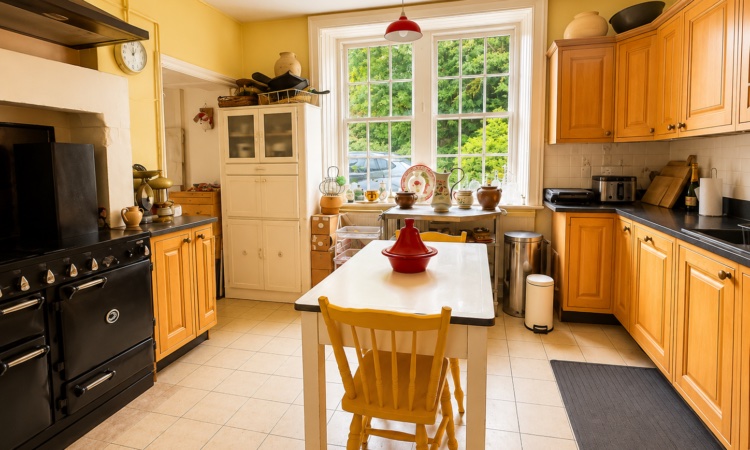
The formal lounge and dining room carry the proportions and atmosphere expected of a substantial period Highland house, while a large family kitchen brings everyday life firmly into the present.
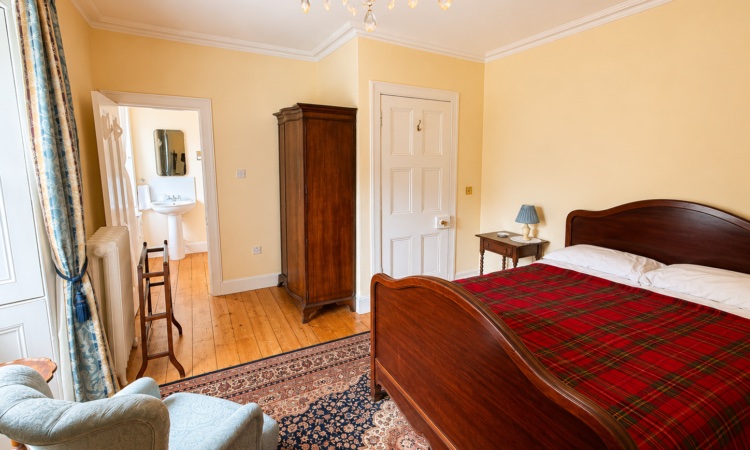
Across the upper floors are five bedrooms in the main house, including substantial attic rooms with original fireplaces, while Glencoe Cottage provides separate self contained one bedroom accommodation.
Yet this is not being presented as a perfectly finished historic house requiring nothing from its next owner.
Its restoration remains incomplete.
McIntyre & Company makes clear that further work will be required, including reviewing and completing elements of the electrical installation, and the property is being sold as seen.
In many ways, that feels entirely appropriate.
Invercoe House has never been frozen in a single moment of history.
It has changed with the people who have occupied it, from a landscape associated with the MacIain chiefs to an 18th century Highland residence, estate building, family home, meeting place for Clan Donald and temporary sanctuary for the collections of Glencoe Folk Museum.
Its next owner will inherit that history, but they will also have the opportunity to add something of their own.
And beyond the walls lies Glencoe itself.
The River Coe passes nearby on its journey towards Loch Leven, while some of Scotland’s most recognisable mountains rise around a village whose history and landscape attract people from across the world.
Walking, climbing, cycling, skiing and kayaking are all part of life here, while Fort William, Kinlochleven, Glen Etive and the West Highland Way place Invercoe at the heart of an extraordinary part of the Highlands.
There are grander houses in Scotland and there are certainly easier houses to own.
There cannot be many, however, where the history of a place, a clan and the people who fought to preserve their community’s memory can be traced so closely through one front door.
More than three centuries after the story of Invercoe became entwined with one of the defining events of Highland history, the house is ready for another chapter.
This time, somebody new gets to write it.
The property is being marketed by McIntyre & Company
The asking price, full property details, photographs, floor plans, Home Report where available, and viewing information can all be found on the official listing.


