

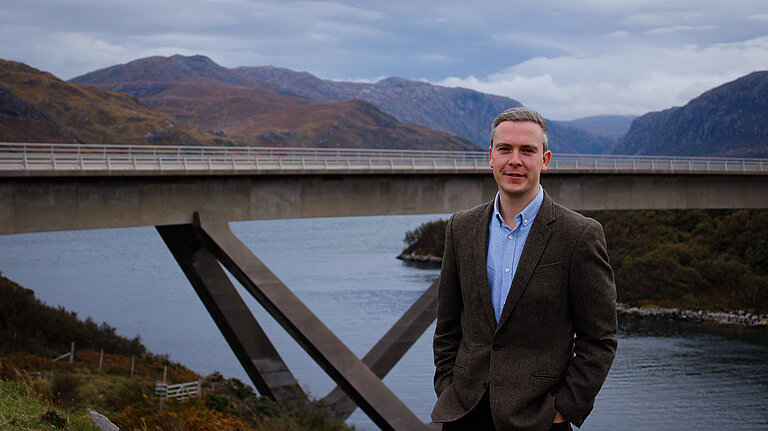
The future of economic investment in East Sutherland has become the focus of a fresh political challenge after MSP David Green demanded to know how the Scottish Government intends to replace the opportunities lost following its rejection of the Coul Links golf course.
The Caithness, Sutherland and Ross MSP raised the issue at First Minister’s Questions, confronting Deputy First Minister Jenny Gilruth over the decision announced on 21 October.
The proposed championship course near Embo had promised significant economic benefits, including employment, tourism spending and funding for community projects.
Supporters estimated the development could create 400 full time equivalent jobs, contribute £12 million annually to the local economy and provide £1 million towards habitat restoration.
The proposals also included a community share potentially worth hundreds of thousands of pounds each year.
However, Scottish Ministers rejected the application after concluding that its economic benefits did not outweigh the potential damage to nationally and internationally protected habitats.
The decision followed years of disagreement between those who regarded the development as an opportunity for economic regeneration and conservation organisations concerned about its environmental consequences.
Green argues that the rejection leaves serious questions about employment, investment and population decline in East Sutherland.
Speaking in Parliament, he said:
“Last week, the Scottish Government ignored local public opinion and rejected the Coul Links golf course in my constituency.
“Ministers have said no to 400 full-time equivalent jobs, no to £12 million a year for the local economy, no to £1 million for habitat restoration, and no to a community share worth hundreds of thousands of pounds a year.
“Given Sutherland faces severe population decline, many of my constituents simply despair at this decision.
“Does the Deputy First Minister understand why?
“And will she explain to my constituents how she intends to replace the opportunities this government has rejected?”
Responding, Gilruth acknowledged that the project would have generated tourism benefits but said environmental protections had ultimately taken precedence.
She said:
“The strength of views on both sides should be expressed by supporters, as Mr Green has set out, but also by opponents.
“The Government is committed to supporting sustainable economic growth across the Highlands.
“Our decision letter accepts that the proposal would deliver local and regional tourism, as the member sets out.”
She explained that those benefits did not outweigh the identified impacts on the Loch Fleet Site of Special Scientific Interest and the Dornoch Firth and Loch Fleet Ramsar site.
Gilruth referred Green to the published ministerial decision and planning reporters’ findings rather than outlining alternative investment proposals.
Following the exchange, Green said:
“Anyone who was bitterly disappointed by the Scottish Government’s decision to reject Coul Links will have had little to smile about today.
“This was an opportunity for the Deputy First Minister to explain to my constituents what the Government will do for East Sutherland to make up for the opportunities Ministers have rejected.
“Unfortunately, the Deputy First Minister swerved the question.
“Ministers should come to East Sutherland, look my constituents in the eye and explain how they intend to replace the lost opportunities for jobs, affordable homes, and community investment.”
“Long-term habitat management funding is central to those next steps.
“The government must be left in no doubt that the status quo isn’t acceptable.”
Conservation groups, including RSPB Scotland, have welcomed the refusal, arguing that the protected dunes and wildlife habitats must be safeguarded for future generations.
But for those who supported Coul Links, the immediate concern is what alternative economic opportunities might now emerge.
The Scottish Government has reaffirmed its commitment to sustainable growth across the Highlands, although no specific replacement investment was identified during the parliamentary exchange.
With the golf course plans rejected, attention is now turning towards the longer term future of East Sutherland and how economic development can be pursued alongside the protection of its natural environment.


