

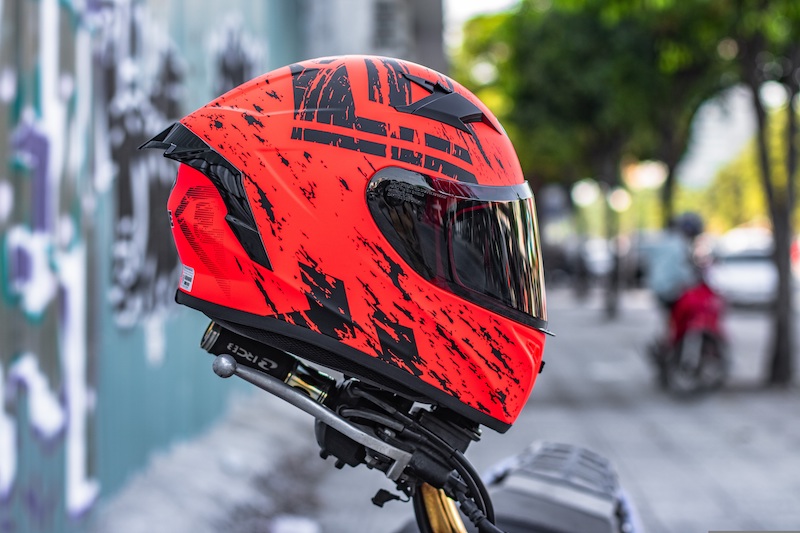
People who regularly wear helmets are being urged to look beyond the usual flattened hair and watch for repeated breakage or thinning appearing exactly where protective headgear makes contact.
Hair specialists say a narrow line of short, uneven hairs returning around the same edge or pad can indicate repeated mechanical damage, particularly when accompanied by soreness or irritation.

For motorcyclists, cyclists and people who wear protective headgear at work, the important distinction is between temporary helmet hair and a pattern which repeatedly develops at the same contact point.
Dr Adam Ali, Hair Transplant Surgeon at UK Hair Transplants, said:
“Flattened hair after a journey or shift is temporary.
“The concern is a repeat border of shorter hairs or localised thinning at the exact point where the helmet makes contact.”
The British Association of Dermatologists describes traction alopecia as hair loss caused by constant pulling, usually affecting some hairs more than others and potentially producing bald patches.
Its guidance primarily addresses repeated traction caused by tight hairstyles and does not specifically identify helmets as a cause.
That means a helmet should not automatically be blamed for a receding hairline, thinning hair or general shedding.
A more relevant warning sign is damage which repeatedly follows the precise area where an edge or pad comes into contact with the scalp.
Anyone spotting that pattern can check the helmet’s size and adjustment against the manufacturer’s instructions and look at whether the internal padding has become worn.
Safety must remain the priority, however, and protective headgear should never simply be loosened beyond its intended fit or modified using makeshift padding in an attempt to protect the hair.
Dr Ali added:
“Hair protection must never come at the expense of safety.
“Ask a qualified fitter or the employer responsible for the headgear to review the fit, and follow the manufacturer’s instructions rather than improvising alterations.”
There is some medical literature examining the relationship between helmets and scalp conditions, although the available evidence remains limited.
A 2024 report in JAAD Case Reports described two firefighters with lichen planopilaris who reported that wearing fire helmets worsened their symptoms, with prolonged helmet use suggested as a possible contributor to progression.
Both patients already had an underlying scarring condition and a history of hair transplantation, meaning the cases do not establish that ordinary helmet use commonly causes hair loss.
No reliable prevalence figure has been identified showing how frequently everyday helmet users experience this type of problem.
A localised strip of broken hairs may be consistent with mechanical damage, but hair loss spreading beyond the helmet contact area or continuing after a fit problem has been addressed should be assessed separately.
Anyone experiencing persistent scalp symptoms or continuing hair loss should seek advice from a GP or dermatologist while continuing to wear any protective equipment required for their safety.
More information and advice is available from UK Hair Transplants


