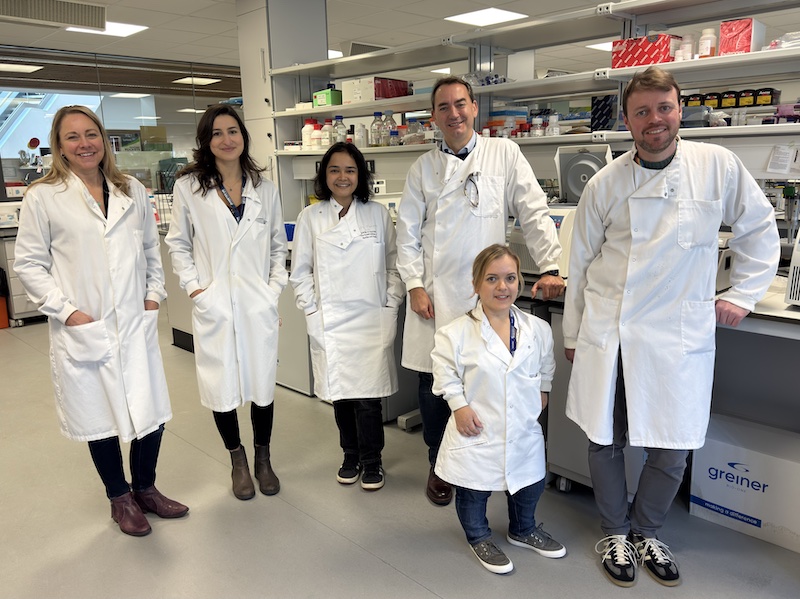
Scientists in Aberdeen have taken an important step towards developing a treatment that could free people living with a rare and debilitating medical condition from a lifetime of painful daily injections.
Researchers at the University of Aberdeen’s Rowett Institute have successfully tested an experimental gene therapy for generalised lipodystrophy, a condition that severely restricts the body’s ability to store fat.
For those affected, the consequences extend far beyond appearance, with the condition contributing to serious diabetes, fatty liver disease, persistent hunger and chronic pain.
Because patients have very little fat beneath their skin, the daily injections needed to manage the condition can be particularly painful.
The treatment also requires refrigeration, creating practical difficulties for people travelling, working or simply managing everyday life.
Now, researchers believe they may have found a way to provide similar benefits through a single injection rather than continuous daily treatment.
Their findings, published in the scientific journal Gene Therapy, describe an experimental approach using an adeno associated virus, known as AAV, to deliver genetic instructions that enable the body to produce leptin.
Leptin is a hormone involved in regulating hunger and metabolism, which people with generalised lipodystrophy often lack.
In laboratory experiments, one injection produced significant improvements in mice with the condition for at least two months.
The animals showed reduced liver fat, improvements in markers associated with diabetes and lower levels of hunger.
Lead researcher Dr Nadine Sommer said:
“These are key effects of daily leptin injections in lipodystrophy patients, suggesting a gene therapy could give the same benefits over a long period from a single injection”.
The findings offer encouragement, although the treatment has so far been tested in mice rather than people.
Researchers are now examining lower doses, while a different viral delivery system would be required before the approach could be considered for human treatment.
Professor Justin Rochford, who led the study at the Rowett Institute, said:
“Clinical application of this approach has the potential to offer a much-needed long-lasting, effective and less painful new therapy to improve the health and quality of life of people living with generalised lipodystrophy.”
The progress has been welcomed by patient organisations in Britain and the United States, where families affected by lipodystrophy understand the considerable demands of lifelong treatment.
Dr Rebecca Sanders, co-founder and chair of Lipodystrophy UK, said:
“It is very encouraging to see research exploring new ways to deliver leptin therapy, particularly approaches that could one day reduce the burden of lifelong daily treatment.
“We welcome research that broadens the treatment options available to people living with lipodystrophy and hope that, as this work progresses, researchers, clinicians and patient experts will work together to ensure future therapies deliver meaningful benefits in the outcomes that matter most to patients.”
Sharon Halperin, Research Director at Lipodystrophy United, added:
“This research is a very valuable step forward in finding better treatments for lipodystrophies.
“It also means a lot to the lipodystrophy community to know researchers are working hard on their behalf.”
The study received support from EASTBIO, the Biotechnology and Biological Sciences Research Council and Diabetes UK, which is also funding further investigations.
Dr Lucy Chambers, Head of Research Impact and Communications at Diabetes UK, said:
“People with lipodystrophy often develop severe insulin resistance which can lead to a rare and difficult to manage form of diabetes which has limited treatment options.
“Although this research is still at an early stage, these findings mark an important step towards a potential new treatment that could one day ease the burden of managing the condition and improve people’s health and quality of life.
“Diabetes UK is proud to have supported this work and to be funding the next stage of research, which will help us understand whether this approach could ultimately lead to better treatments for people living with lipoatrophic diabetes.”
There is still considerable work ahead before any gene therapy could become available to patients, including establishing its long term safety and effectiveness.
Nevertheless, the research represents meaningful progress towards a treatment that could reduce pain, ease the burden of managing a lifelong condition and give patients greater freedom in their everyday lives.