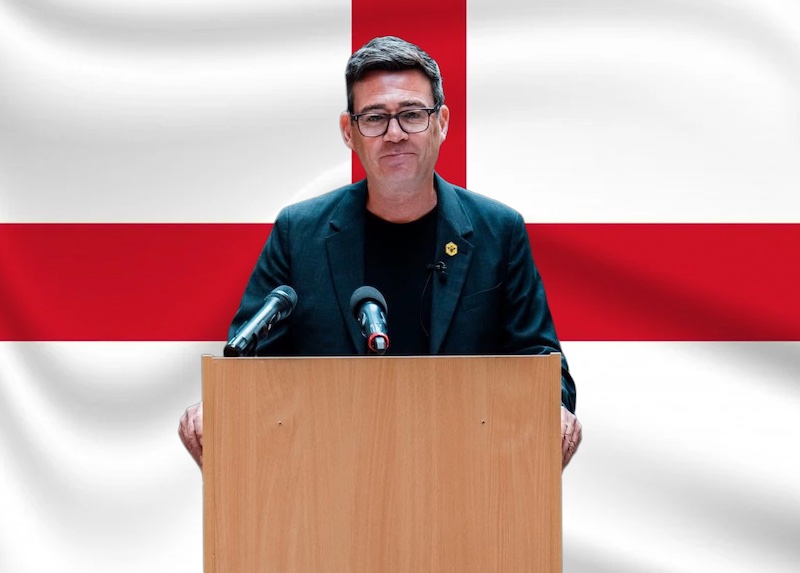
The question of whether Scotland should be allowed another independence referendum returns to Westminster today, as the SNP challenges Prime Minister Andy Burnham to explain why Britain could reconsider Brexit while Scotland remains unable to revisit its own constitutional future.
SNP MP Seamus Logan has secured a Westminster Hall debate on Tuesday 24 November, focusing on the UK Government’s policy towards a second independence referendum and the legal mechanism required to make one possible.
The debate follows comments made by Burnham in the House of Commons on Monday, when he agreed that it would be “unthinkable” for Britain to rejoin the European Union without first holding another referendum.
For the SNP, those remarks raise an obvious political question about the different approaches being taken to two constitutional decisions made only two years apart.
Scotland voted against independence in 2014 but supported remaining in the European Union in 2016, before leaving alongside the rest of the United Kingdom.
The legal position, however, is different from the political argument.
In November 2022, the UK Supreme Court ruled that the Scottish Parliament could not legislate for an independence referendum without changes to its existing powers.
The 2014 referendum was made possible through an agreement between the Scottish and UK governments, allowing Holyrood temporary authority to hold the vote.
Any comparable referendum would therefore require a new agreement or legislation at Westminster.
Logan wants Labour to explain the circumstances in which it would agree to such a process.
He said:
“Andy Burnham’s democratic credentials will collapse if he thinks he can flirt with the idea of another referendum on Brexit, while at the very same time telling the people of Scotland he will block their right to a referendum on independence.
“If Andy Burnham is moving to the right position where he accepts that people are able to revisit the EU referendum decision taken 10 years ago, how can any Labour Party politician or any Prime Minister now seriously claim Scotland can’t revisit the independence referendum decision taken 12 years ago?
“It is welcome that the Labour Party now seem to accept that in a democracy people have the right to change their mind, if that principle applies to Brexit, it equally applies to Scotland’s future as an independent country in the EU.
“It’s time for the Labour Party to stop standing in the way of Scottish democracy and time for them to finally come clean on their policy, what is their position on the democratic route for the people of Scotland to decide their own future?
“The broader reality is that the Labour Party’s roadblock to indyref 2 is running out of road.
“Westminster is headed for a hung parliament, Andy Burnham will have to deal with the SNP on a day-to-day basis and our demands on independence are crystal clear.
“That is the reality for Andy Burnham if he wants to operate his government.
“Where the alternative is Nigel Farage, the SNP would keep Andy Burnham in post, but the SNP will hold the power to put Scotland first and secure our referendum on independence.
“SNP MPs would leverage that power to secure the best deal for Scotland, hold the Labour government’s feet to the fire and secure a referendum on independence.”
The SNP’s argument also comes amid renewed discussion about constitutional change elsewhere in the United Kingdom, with Irish Tánaiste Simon Harris calling for greater clarity over the circumstances that could lead to a referendum on Irish reunification.
However, the arrangements governing a potential border poll in Northern Ireland are established under different legislation and cannot simply be applied to Scotland.
There is also an important distinction between Burnham acknowledging that rejoining the EU would require public consent and actually committing his Government to another Brexit referendum.
The Prime Minister has not made that commitment.
Logan’s suggestion that the SNP could hold the balance of power in a future Parliament is likewise a political scenario rather than an established outcome.
For now, Labour continues to oppose another Scottish independence referendum, while the SNP maintains that the people of Scotland should have the opportunity to reconsider the decision made in 2014.
Today’s debate will not itself change the law or authorise another vote.
But it will provide an opportunity to press the UK Government on a question that has remained unanswered for years, namely what democratic circumstances would persuade Westminster to agree to another Scottish independence referendum.