

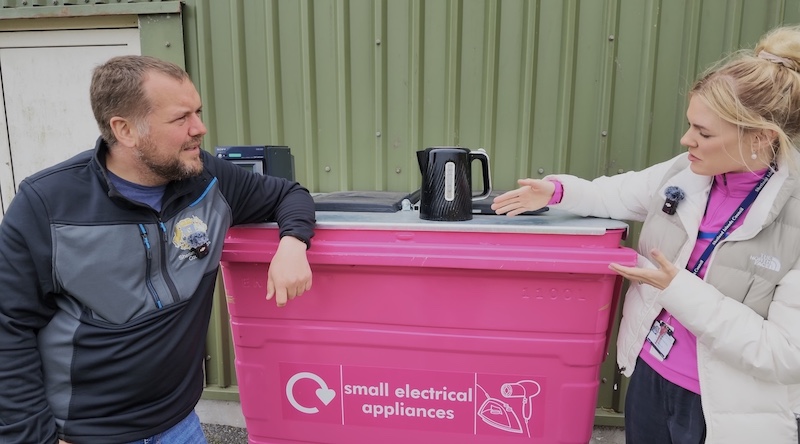
New bright pink recycling bins are being rolled out across Shetland in a bid to make it easier for residents to recycle unwanted electrical items closer to home.
The trial, launched by Shetland Islands Council, will see 20 collection bins installed alongside existing glass recycling points across the islands.
The bins are designed for smaller electrical items that can no longer be reused or repaired, including kettles, toasters, electric toothbrushes and other household appliances.
The move builds on Shetland’s existing electrical recycling efforts, which already see around 230 tonnes of electrical equipment recycled every year.
That is the equivalent of around 37 trailer loads of items being sent for processing and recycling at a specialist centre in Irvine.
Council officials hope the new bins will encourage even more people to recycle electrical goods rather than placing them in general waste destined for incineration.
Brydon Gray, Team Leader of Waste Operations, said:
“Bins like these have been a real success in other areas of Scotland.
“The bright pink bins are eye-catching, and we hope they offer more flexibility for people to recycle in their communities.
“We’ve been recycling electrical items in Shetland for several years and a huge number of items are brought to the waste management facility at Gremista.
“But we want to capture more.
“Pretty much anything with a plug can be recycled.
“From stereos to slow cookers, vacuum cleaners to washing machines.
“These smaller bins will hopefully mean we can capture more of the goods that end up in people’s black bags which go on to the incinerators.
“We continue to offer a bulky uplift service where folk can pay for bigger items to be collected.
“If the trial proves to be a success, the Council will look to expand the service to other areas.”
Residents are being reminded that electrical items still in working order can often be reused and should be taken to reuse facilities such as scrap stores wherever possible.
The new trial reflects a growing effort to reduce waste, recover valuable materials and make recycling more convenient for communities across the islands.
If successful, the scheme could be expanded to further locations, helping even more electrical items avoid ending up in general waste.


