

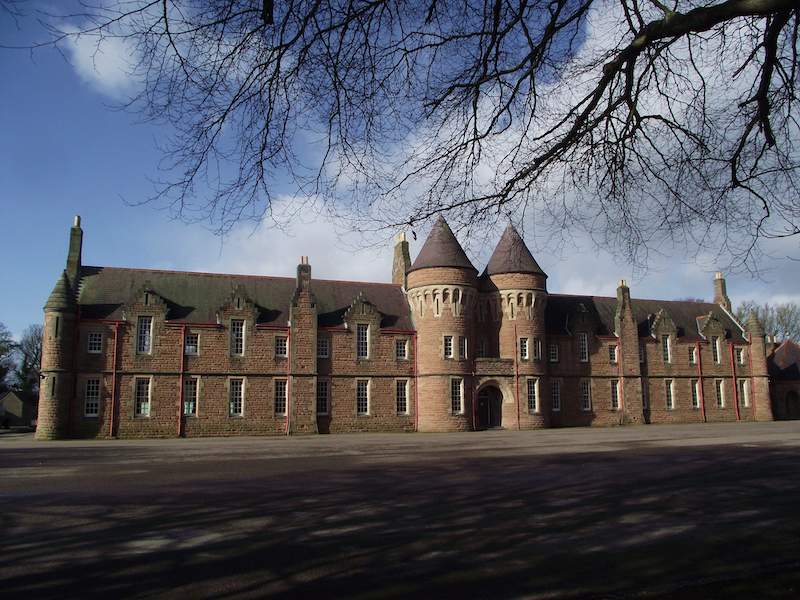
Plans to house up to 300 asylum seekers at Cameron Barracks in Inverness have been abandoned, bringing to an end months of uncertainty for residents and military families living near the site.
The Home Office has confirmed the proposal will not go ahead following sustained opposition from local campaigners, Highland Council and Inverness, Skye and West Ross shire MP Angus MacDonald, who repeatedly challenged ministers over the handling of the plans.
The proposal was first announced in October 2025 and immediately attracted criticism over the lack of consultation with local communities, public services and elected representatives.
Mr MacDonald raised the issue in the House of Commons and at the Scottish Affairs Committee, while also meeting Home Office officials, Highland Council, NHS Highland and representatives from the local community.
A key issue throughout the dispute centred on whether Cameron Barracks required a House in Multiple Occupation licence before it could be used to accommodate asylum seekers.
Highland Council maintained that the proposed use fell within the definition of an HMO under the Housing (Scotland) Act 2006 and therefore required a licence, a position disputed by the Home Office, which had assumed planning would not present a barrier because the site had previously been used for Afghan resettlement.
The decision also follows increasing scrutiny of similar accommodation sites elsewhere in the UK, including concerns over whether they represent value for money when compared with hotel accommodation.
Welcoming the decision, Angus MacDonald said:
“This is the right outcome, and it is a result of the strength of feeling shown by residents, and by the military families connected to Cameron Barracks who made their concerns heard from the very start.
“The Highland Council’s insistence that the Home Office complies with the HMO requirement undoubtedly played a large role in this decision.
“There was also a strong local feeling that the site itself was simply too close to the city centre, schools and residential areas.
“The sense of closing asylum hotels in town centres in the South of England while opening an Inverness asylum barracks similarly poorly located defied logic.
“Since the initial poor communication of the news, I do want to acknowledge that Minister Norris and his officials have engaged with me constructively, and I am grateful to him for that.
“I also want to thank everyone who got in touch, attended meetings, and made clear that Inverness deserved better than to be informed rather than consulted.
“The experience at Crowborough should also give ministers pause: if sites of this kind are not even delivering the savings they were supposed to, the case for imposing them on communities without consultation looks weaker still.
“I will continue to hold ministers to the standard that decisions affecting the Highlands must be made with the Highlands, not done to them.”
The decision is likely to be welcomed by many residents who argued that the proposal should never have progressed without meaningful engagement with the local community and the public bodies expected to support it.
While the Cameron Barracks proposal has now been dropped, the debate has once again highlighted the importance of consultation when major decisions have the potential to affect Highland communities.


