

A growing fuel crisis across the UK has brought renewed scrutiny to the closure of the Grangemouth refinery, as political tensions sharpen over energy security and industrial policy.
The Scottish National Party has criticised the Labour Party government, describing the decision to shut the refinery as “inexcusable” at a time when fuel supply concerns are beginning to surface across the country.
Reports earlier this week suggested the UK may be facing a tightening supply of jet fuel, with warnings that one of the last known shipments from the Middle East was approaching, raising fears for both aviation schedules and wider fuel availability.
The refinery at Grangemouth had long played a central role in supplying both jet fuel and petrol across Scotland, and its closure has now become a focal point in the wider debate around resilience, infrastructure, and national energy strategy.
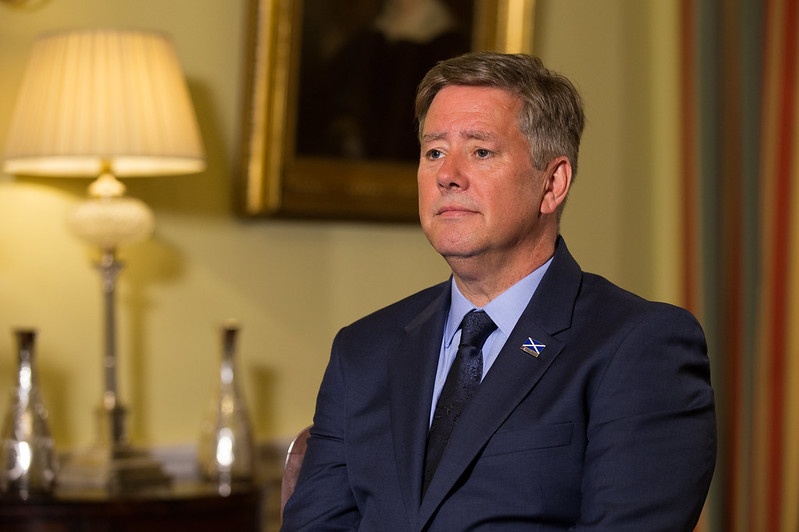
SNP deputy leader Keith Brown said the current situation exposed what he described as a “dangerously short-sighted” decision, linking the closure directly to pressures now being felt across transport and fuel supply chains.
Since taking office, the UK Government has intervened in other parts of heavy industry, including support for British Steel and facilitating new ownership for the Lindsey oil refinery in England, moves that critics argue stand in contrast to the approach taken in Scotland.
Commenting, Keith Brown said:
“Grangemouth refined fuel for Scotland, but the Labour Party made the inexcusable decision to shut it down, losing Scottish jobs and putting our energy security at risk.
“Airlines are cancelling flights, petrol stations are overrun or shutdown, yet Keir Starmer called an emergency press conference to announce nothing, Anas Sarwar promised to save Grangemouth, where is he now?
“Closing Grangemouth will go down as one of the most dangerously short-sighted decisions in Westminster’s rich history of grievous errors, contrast that with heavy industry down south and the Labour Government couldn’t get the cheque book out quick enough.
“It is absolutely absurd that in energy rich Scotland the cost of filling your car or heating your home is unaffordable, that is a direct consequence of Westminster control of our natural resources and critical national assets.
“Through a fresh start with independence, we can put Scotland’s energy in Scotland’s hands and lower bills, protect jobs and deliver energy security, only the SNP is offering that future in May.”
The situation continues to develop, but the wider question now facing both governments and the public is whether the UK’s current energy infrastructure is robust enough to withstand future shocks, or whether decisions taken in recent years have left it exposed at precisely the wrong moment.
Energy security, once an abstract policy discussion, has returned sharply into focus, with real world consequences now being felt across transport, business, and daily life.


