

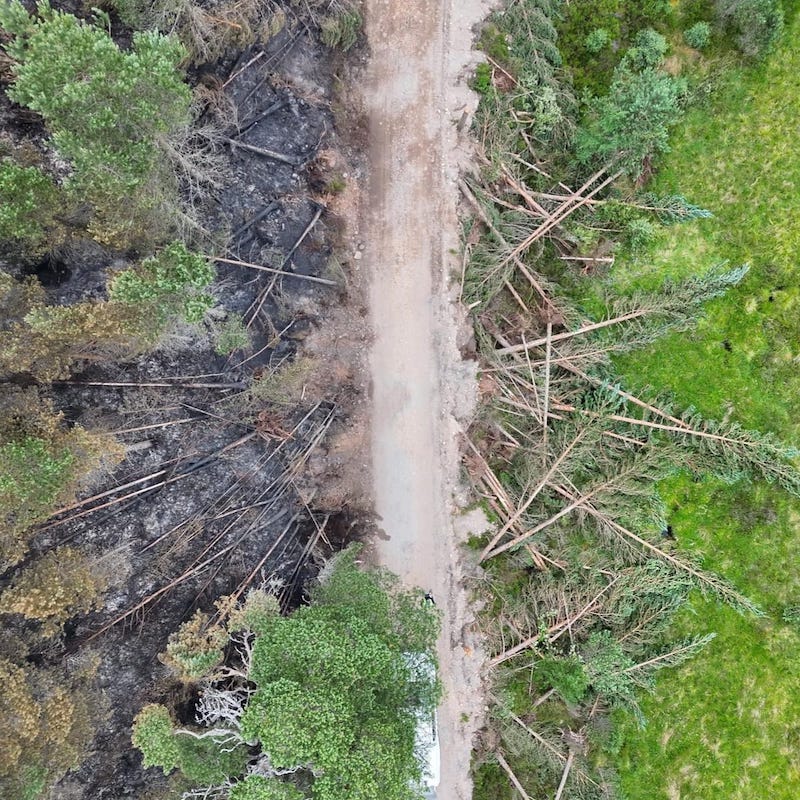
Forestry and Land Scotland has entered a new phase of its response to the Glenmore wildfire as work begins to clear hundreds of trees felled during the emergency effort to contain the blaze.
The move marks the start of the longer recovery process, with teams working to make affected areas safer while reducing the risk of future flare ups across the fire site.
Specialist tree shears and forestry harvesting machinery are now being used to remove trees that were felled and bulldozed to create more than six kilometres of emergency firebreaks, with work initially concentrating on the ski road and the Ryvoan Trail.
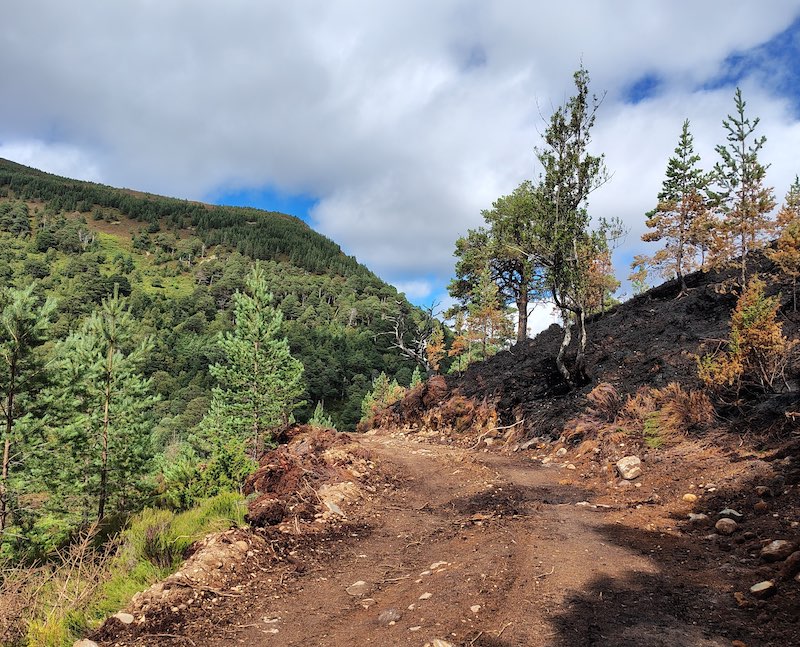
As well as improving access, the work will remove unstable trees and reduce the remaining fuel load left behind after the emergency response.
Helicopter water bombing of remaining hotspots continues across the fire site, while thermal imaging drones are being used to monitor the area and reduce the risk of any flare ups as recovery work progresses.
Forestry and Land Scotland has also warned that limited public access is likely to remain in parts of Glenmore while further tree removal and safety work is carried out.
Alex Macleod, FLS’ North Region Manager, said;
“FLS’ initial imperative was to secure the helicopters for water bombing but creating the fire breaks was an equally urgent priority.
“Immediate action was required and it was necessary to fell the trees without the planned care and due attention and diligence that is our usual practice.
“Many trees were just bulldozed to get them out of the way as quickly as possible.
“As well as being potentially unstable and presenting a physical risk those trees might act as a fuel load so we are getting them cut and moved as quickly as we can.
“We’re also carefully assessing the still standing trees.
“The fire will have affected ground stability in some places and some trees that no longer have a good root hold will also be removed; we have seen some trees fall over already.
“The ski road and Ryvoan trail are our priority but we have more of this to do elsewhere and it is likely to mean limited access to the area once the public begin to return.”
Trees removed during the operation will be stacked at Hayfield car park until they can be collected and transported out of Glenmore, while Forestry and Land Scotland personnel continue providing logistical support to Scottish Fire and Rescue Service crews working in less accessible parts of the site.
Alex added;
“Our Glenmore team, supplemented by colleagues from elsewhere in the Region, have worked with SFRS, CNPA, RSPB and all the volunteers from the community and from neighbouring estates.
“I would like to express FLS’ thanks for the effort, commitment and single-mindedness from all concerned.
“There is still a long way to go but that collective goodwill is going to be important in helping the affected communities and organisations in the longer-term recovery,”


