

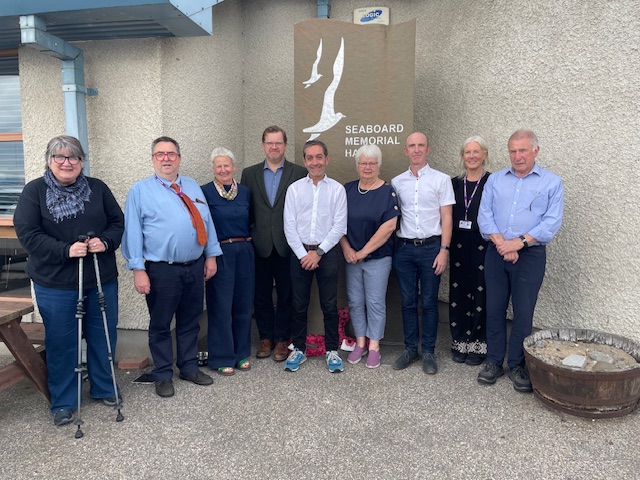
A major new report has delivered a stark assessment of poverty and inequality across the Highlands while insisting that change is possible if organisations, communities and public bodies work together with greater urgency and purpose.
The Highland Poverty and Equality Commission’s final report, Essential Elements, will be presented to councillors this week after nine months of research, community engagement and evidence gathering across the region.
The independent commission visited 14 Highland communities, carried out 26 outreach visits and spoke directly with people experiencing financial hardship, poverty and inequality to build a picture of the challenges facing communities across one of Scotland’s largest and most diverse regions.
Its conclusion is clear: poverty in the Highlands is real, damaging and costly, but it is not inevitable.
The report highlights a series of challenges affecting communities across the region, including rising levels of in work poverty, fuel poverty rates around double the Scottish average, a shortage of affordable housing, poor transport links, weak digital connectivity and concerns among young people about housing, financial security and their ability to influence decisions.
Commission members also found that many people experiencing poverty felt excluded from decision making despite being keen to help shape solutions.
One of the most striking findings is that seven out of every ten Highland children living in poverty are growing up in working households, underlining how employment alone is no longer always enough to protect families from financial hardship.
The report calls for a new approach built around stronger collaboration between public bodies, charities, community organisations and local residents.
Among its recommendations are increased investment in affordable housing, expanded childcare provision, improved transport and digital connectivity, greater support to help people access financial assistance and stronger pathways into fair and sustainable employment.
The commission also argues that people with direct experience of poverty should play a much greater role in shaping policies and services.
Despite highlighting significant challenges, the report also points to examples of successful community action already taking place throughout the Highlands.
Projects such as breakfast clubs, community programmes and support networks run by organisations including Inverness CT Community Trust were highlighted as examples of the positive impact local initiatives can have.
The report also points to opportunities arising from major investment in renewable energy, housing, skills and infrastructure projects across the Highlands, arguing that long term benefits must be shared more widely among local communities.
Co chairs Jim McCormick and Maggie Cunningham said:
“Poverty and inequality across Highland today are real, damaging and costly, but they can be resolved.
“We have heard echoes of fatalism, that there is belief that things cannot really improve.
“The conclusion we have reached is different
“Poverty is not a force of nature that cannot be changed.
“We have seen in our past, and still see today in some neighbouring societies, that poverty can be reduced substantially.
“What sustains our hope are the bright spots we have encountered.
“These are often community anchors of many shapes and sizes, building the connections in everyday life that enable us to live better lives.
“They often do this against the odds and despite the systems they sit within.
“Highland’s greatest strengths lie in its community assets, driven by people who care deeply about the issues we cover in this report.
“The support offered by community groups and third sector organisations, by volunteers and staff is often the most trusted and fragile at the same time.
“We cannot afford to take this support for granted.”
The commission is calling on organisations across the Highlands to provide an initial response by the end of 2026 and to begin working together on a shared programme aimed at reducing poverty and inequality across the region by 2030.


