

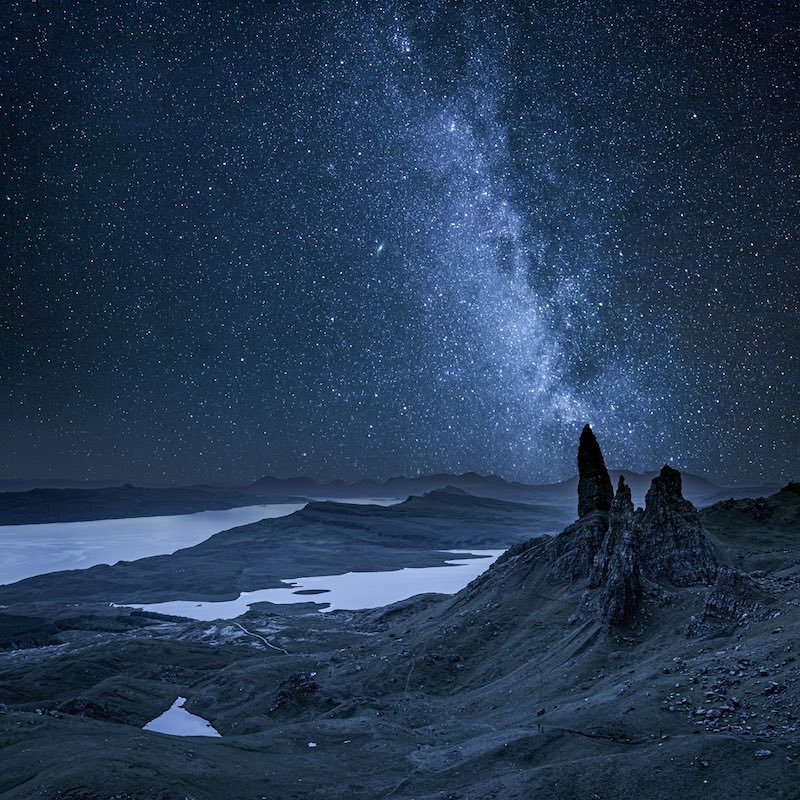
A new planning policy aimed at protecting the Highlands’ famous dark skies and reducing light pollution across the region will be considered by The Highland Council next week.
Councillors sitting on the Economy and Infrastructure Committee will meet on Thursday 28 May to discuss the proposed Dark Skies Draft Planning Policy which could shape how lighting is managed in future developments across Highland.
The proposed policy would apply to new developments that fall under planning control and aims to reduce unnecessary light pollution while balancing safety, accessibility and practical needs.
It would not affect existing lighting installations already in place unless they become part of future planning applications.
Highland already contains some of the darkest skies in Europe with several areas scoring exceptionally low on the Bortle scale which measures levels of light pollution.
Across the region there has been growing interest from communities seeking formal Dark Sky recognition as both an environmental protection measure and a tourism opportunity linked to stargazing and the Northern Lights.
Chair of the Economy and Infrastructure Committee, Councillor Ken Gowans, said:
“Highland is home to some of the darkest skies in Europe that score low on the Bortle scale.
“Highland is already recognised internationally, and communities across the region are increasingly interested in achieving formal ‘Dark Sky’ status.
“This will not only enable people to enjoy Highland’s stunning scenery in daytime but our amazing skies and glorious Northern Lights at night.
“The proposed policy approach would provide a clearer and more consistent framework for managing lighting in new developments.”
The council report highlights a wide range of possible benefits linked to reducing light pollution including lower energy use, reduced carbon emissions, protection of wildlife habitats and improvements to health and wellbeing through better sleep patterns.
Tourism is also seen as a major factor, with dark sky tourism becoming increasingly popular across rural Scotland as visitors seek clearer night skies away from urban light pollution.
The proposed policy would also require consideration of technical lighting standards, safety requirements and integration with existing street lighting systems.
If approved, council officers will begin preparing detailed policy proposals and launch consultation with communities, businesses and other organisations later in 2026 as part of the wider Highland Local Development Plan.
Interim technical guidance on reducing light pollution would also be prepared before the end of the year.
For many parts of the Highlands, where vast skies and remote landscapes are already central to the region’s identity, protecting darkness itself is increasingly being viewed as an asset worth preserving.


