

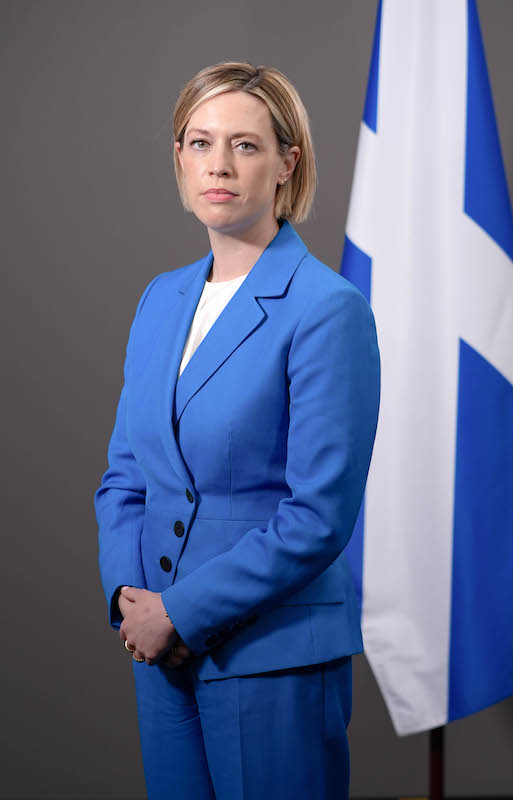
Deputy First Minister Jenny Gilruth is set to defend the Scottish Government’s approach to taxation as ministers prepare to introduce new measures aimed at raising revenue from wealthier individuals and assets.
Speaking during a parliamentary debate on wealth taxation, Ms Gilruth will argue that Scotland’s tax system should continue to focus on fairness while supporting public services and cost of living measures.
Among the plans being taken forward are a new tax on private jets from 2028 and the creation of two additional council tax bands for properties valued at more than £1 million.
The Scottish Government says the measures are intended to ensure those with the greatest ability to contribute pay a larger share while protecting the majority of taxpayers.
Ministers also maintain that most people in Scotland continue to pay less income tax than their counterparts elsewhere in the United Kingdom.
The Deputy First Minister is expected to link taxation directly to funding for public services and support measures available in Scotland.
Jenny Gilruth said:
“People across Scotland are feeling the strain of the cost-of-living crisis and our approach to tax must continue to be based on fairness, asking those with the broadest shoulders to contribute more while protecting the majority of people.
“Taxation helps us to target investment to maximise economic growth, deliver public services and support cost-of-living measures not available elsewhere in the UK, including free tuition, free prescriptions and our plans for a £2 bus fare cap across Scotland.
“That is why work is underway to introduce a private jet tax and a mansion tax.
“That is what we promised and that is what we are delivering.
“While we will seek further powers from the UK Government to address private jet ‘ghost flights’, jets with no, or very few, passengers which are exempt from Air Departure Tax and beyond powers of devolution, independence would give us the ability to redesign wealth taxation to work more effectively for people and businesses of Scotland.”
The debate comes as political parties continue to set out competing visions for how taxation should be used to fund public services and support economic growth.
The Scottish Government argues that greater powers would allow it to pursue a wider range of tax reforms, while opposition parties continue to challenge aspects of its approach to public spending and taxation.


