The village of Rhynie in Aberdeenshire has been revealed as one of the most important early medieval centres in Scotland, following more than a decade of archaeological research.
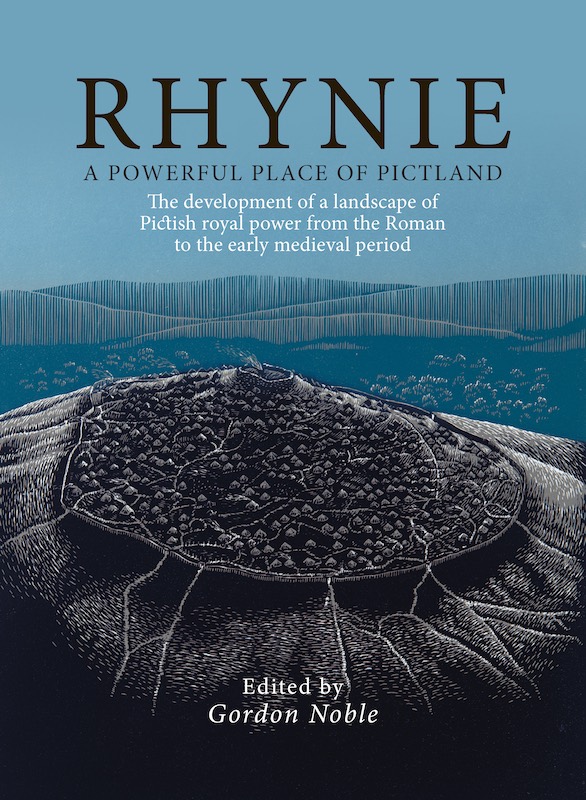
A new book, Rhynie, A Powerful Place of Pictland, brings together ten years of discoveries that show the quiet rural settlement was once a major royal seat with links stretching across Europe.
The publication marks a turning point in how historians understand the Picts, challenging long held assumptions about their society and scale.
Research led by the University of Aberdeen’s Northern Picts project has uncovered evidence of a complex and connected settlement, reshaping the narrative of early medieval Scotland.
Findings show Rhynie was not isolated, but a centre of political authority, craftsmanship and international exchange.
Excavations revealed imported glass vessels from western France and evidence of wine consumption, alongside artefacts that link the site to trade networks spanning from the Byzantine world to Ireland and western Britain.
Metalworking at the site was also highly advanced, with discoveries including ceramic moulds for jewellery, intricate pins, brooches and rare animal figurines.
The presence of such objects points to a community of wealth, skill and status far beyond what was previously understood.
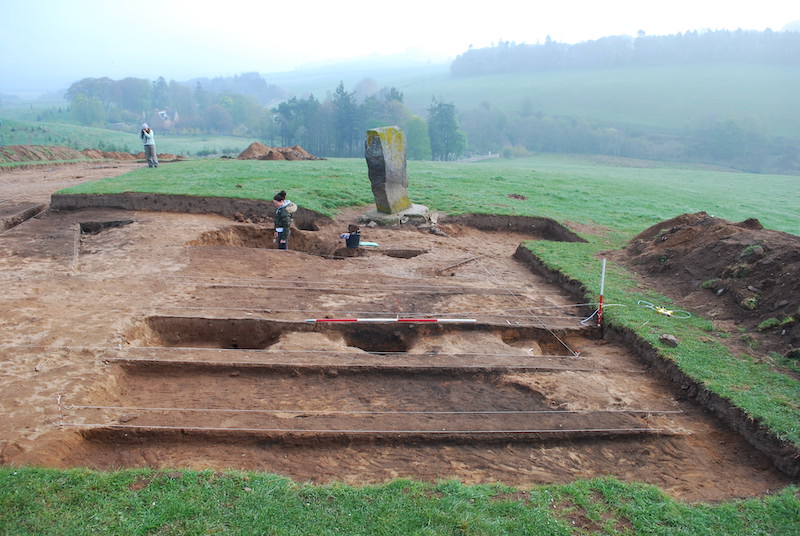
Archaeologists also examined the area’s iconic Pictish stones, including the Rhynie Man and the Craw Stane, further strengthening the case for the site’s royal significance.
The surrounding landscape has delivered equally striking results, particularly at Tap o’ Noth, which overlooks the village.
Here, surveys have identified up to 800 hut platforms within a vast hillfort, suggesting a population of thousands during the fifth and sixth centuries.
The scale of the settlement challenges the idea of a sparsely populated north, instead pointing to a highly organised and densely inhabited region.
Professor Gordon Noble said:
“When we began work at Rhynie, we knew it was significant but we had no idea just how important it would turn out to be.
“What we’ve uncovered is the footprint of a major royal centre, a place that played a pivotal role in the formation of the Pictish kingdoms.
“For decades, people assumed early medieval northern Scotland was sparsely populated and politically fragmented.
“Rhynie shows us something very different, a powerful, organised place with large settlements and sophisticated connections with the wider world.
“Rhynie, A Powerful Place of Pictland brings together over ten years of excavation and scientific analysis to tell the full story of this remarkable landscape.”
The book has been published by the Society of Antiquaries of Scotland following a successful crowdfunding campaign, with more than 400 supporters raising over £18,000 to bring the research into print.
Dr Helen Spencer said:
“At the heart of the Society of Antiquaries of Scotland’s mission is a commitment to empowering research and disseminating knowledge of the past.
“We are, therefore, immensely proud to publish this nationally important monograph, which will have a major impact on the study of Pictish kingship and society.
“We extend our sincere gratitude to all the funders who made this publication possible, especially to the public and our Fellows, whose support of the crowdfunding campaign ensured the physical preservation of this work and its inclusion in UK national libraries.”
Dr Gemma Cruickshanks said:
“Analysis of the many moulds and crucibles left behind by Rhynie’s metalworkers reveal the site was also a centre for the production of hundreds of high-status metal objects.
“These were mainly jewellery such as pins, brooches and rings but also small boar and wolf figurines which have never been found before.
“The details of these finds reveal an exceptional level of skill and artistry which is unparalleled in Scotland during this period.
“Other finds, like pottery and glass vessels from the Mediterranean and quern stones for grinding grain, illustrate extensive trade networks and daily life at Rhynie.”
What emerges is a very different picture of early Scotland, one where power, culture and connection were already firmly rooted in places like Rhynie.
To read the e-book or buy a physical copy of Rhynie, A Powerful Place of Pictland, visit www.socantscot.org/rhynie