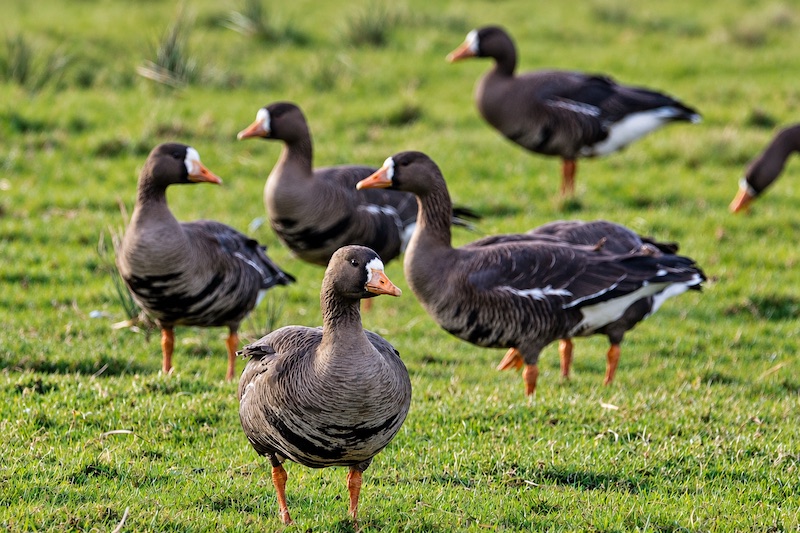
One of Scotland’s most vulnerable winter visitors is facing an uncertain future after its global population fell by almost 60 per cent, prompting new conservation measures to help prevent further losses.
NatureScot has announced plans to strengthen protection for Greenland white fronted geese, a critically endangered species that travels thousands of miles each year to spend the winter on the Hebridean islands and along Scotland’s western coastline.
The scale of the decline is deeply concerning, with numbers falling from approximately 36,000 birds in the late 1990s to fewer than 15,000 in 2026.
These remarkable birds breed in Greenland before making their annual migration south, relying on Scotland’s peatlands for safe roosting and nearby grasslands for feeding throughout the winter months.
Scientists believe the main causes of their decline are climate change affecting breeding conditions in Greenland and illegal hunting in Iceland, both of which present serious challenges for conservation efforts.
Although Scotland cannot directly control those pressures, NatureScot believes improving conditions for the geese during their winter stay could help more birds survive and return to their breeding grounds in better condition.
The new measures include reviewing existing feeding areas and expanding the availability of undisturbed grassland wherever possible.
Peatland restoration will also play an important role, helping improve the habitats where the birds gather to rest and shelter.
Agricultural environmental schemes will be used to support improvements to feeding grounds, while efforts to reduce disturbance will give the geese a better opportunity to build the strength needed for migration.
Rae McKenzie, NatureScot Goose Policy Manager, said:
“Each year, thousands of Greenland white-fronted geese make the long journey from their breeding grounds in Greenland to shelter for the winter in the north and west of Scotland.
“Sadly, over recent decades, the numbers arriving on our shores have drastically reduced.
“While we can’t control many of the factors behind this decline, Scotland does play an important role in the conservation of these geese.
“By increasing action here through, for example, targeting peatland restoration where it can be of most help to the species, and ensuring they remain undisturbed as much as possible, we can help play a role in halting the decline of this charismatic goose.”
Greenland white fronted geese already enjoy full legal protection in Scotland, where hunting the species is prohibited.
Several protected areas also provide important winter habitats, with proposed developments nearby requiring assessments of their potential impact on the birds.
NatureScot is now working with international conservation partners to coordinate efforts across the countries involved in the geese’s annual migration.
The hope is that better protection in Scotland, alongside action elsewhere along their migration route, can help halt the decline of a species whose winter arrival has long been part of the natural life of Scotland’s western islands and coast.