

Millions of cinema goers around the world are seeing some of Scotland’s most spectacular landscapes through the eyes of Christopher Nolan as The Odyssey arrives on the big screen.
Filmed across Moray and Aberdeenshire, the blockbuster transforms ruined castles, sweeping beaches and ancient forests into the mythical world of Greece, placing north east Scotland at the heart of one of the biggest film releases of 2026.
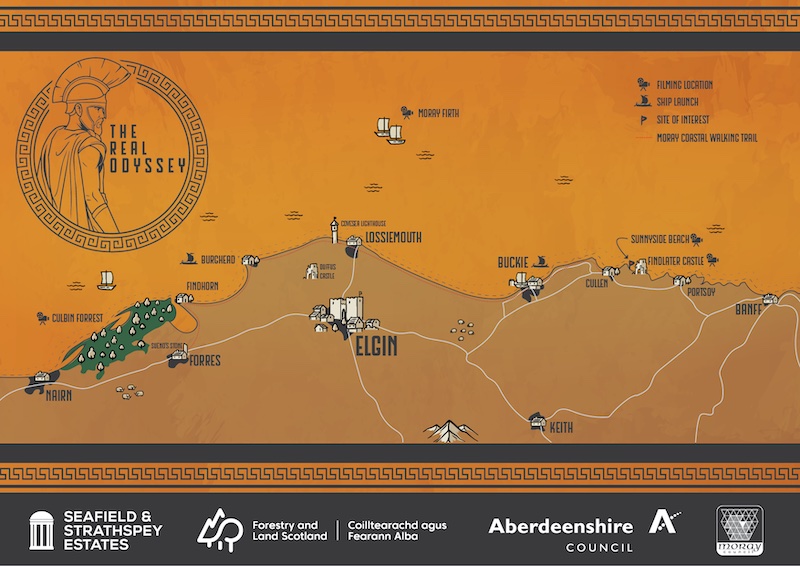
Findlater Castle and Sunnyside Beach in Aberdeenshire feature alongside Culbin Forest and Culbin Sands in Moray, with the region’s wild coastlines and historic landscapes providing the setting for the legendary voyage of Odysseus.
The production brought Matt Damon and a star studded cast to Scotland, but it is the landscape itself that now stands before a worldwide audience and offers the region an opportunity that could last long after the cinema lights come back on.
Findlater Castle, perched above the Moray Firth, provided the backdrop for scenes depicting the mythical island of Aeaea, home of the goddess Circe.
Nearby Sunnyside Beach also features prominently, while Culbin Forest and Culbin Sands were used for scenes showing Odysseus and his crew arriving ashore before travelling inland.
The places chosen by Nolan already carry stories of their own, from ruined medieval fortresses and lost settlements to shifting sands, prehistoric remains and landscapes shaped by generations of people who lived beside the sea.
A new online map is being launched to help film fans follow the locations used during production and discover other places of historical interest across Moray and Aberdeenshire.
The film’s arrival also brings hopes of a lasting boost for tourism, with audiences often inspired to visit the real locations behind the stories they have watched on screen.
Civic Leader of Moray Council, Cllr John Cowe, said:
“We’re absolutely delighted to see Moray featuring in what is undoubtedly one of the most anticipated film releases of the year.
“Christopher Nolan’s The Odyssey will introduce millions of cinema-goers around the world to the spectacular landscapes that make Moray such a special place.
“The stunning setting of Culbin Forest and Culbin Sands provided the perfect backdrop for this epic story, and we are proud that our coastline helped bring one of literature’s greatest adventures to life on the big screen.
“Moray and the North East’s appeal goes far beyond its cinematic credentials.
“Visitors inspired by the film can discover miles of beautiful coastline, fascinating heritage sites, welcoming communities and an extraordinary history stretching back thousands of years.
“From the ancient story of the lost settlement at Culbin to iconic landmarks such as Elgin Cathedral, Spynie Palace and Burghead Fort, there is a wealth of experiences waiting to be explored.
“We hope that audiences who fall in love with the landscapes they see on screen will be inspired to visit North East Scotland for themselves, experience our world-class natural environment and heritage, and enjoy the warm welcome that awaits them here.
“The Odyssey may tell the story of an epic journey home, but we believe Moray and Aberdeenshire is a destination that visitors will want to return to time and time again.”
Provost of Aberdeenshire, Cllr Judy Whyte said:
“The release of The Odyssey marks a truly proud moment for Aberdeenshire and the wider north-east of Scotland.
“Audiences across the world will now experience the breathtaking beauty of our coastline, with the dramatic cliffs, seascapes and iconic ruins of Findlater Castle taking centre stage in one of the most anticipated cinematic events of recent years.
“When a production of this scale comes to our region, the benefits extend far beyond the silver screen.
“During filming, local hotels, restaurants, shops, transport providers and a wide range of businesses all see a significant economic boost from the hundreds of cast, crew and support staff who spend time in our communities.
“Productions such as The Odyssey demonstrate why attracting film and television projects is so important for the prosperity of our towns and villages.
“The longer-term impact can be even greater.
“Around the world, film tourism has proven time and again that audiences are inspired to visit the locations they have seen on screen.
“As cinema-goers follow in the footsteps of Odysseus and discover the stunning landscapes featured in The Odyssey, we expect many visitors to extend their journeys across Banffshire, Moray and the wider north-east, exploring remarkable attractions such as Banff Castle, Duff House, Dunnottar Castle and many of the other heritage sites which make this region so special.”
For audiences around the world, The Odyssey is an epic adventure drawn from one of literature’s greatest stories.
For Scotland, it is a moment when familiar castles, forests and coastlines become part of a global cinematic spectacle, reminding millions of people that some of the world’s most extraordinary landscapes are much closer than ancient Greece.


