

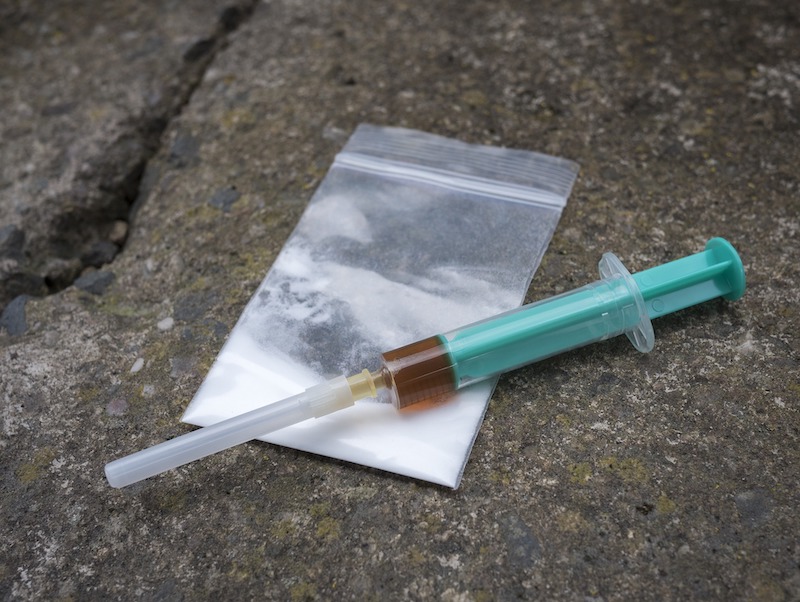
Scotland recorded 1,133 drug use deaths in 2025, an increase of 11% on the previous year as cocaine and highly potent synthetic opioids continued to take a heavy toll.
New figures from National Records of Scotland show there were 116 more deaths than in 2024, with the rate reaching 21.4 deaths for every 100,000 people.
That rate is four times as high as it was in 2000, when the current records began, although the total number of deaths remains below the peak recorded in 2020 and is still the sixth highest on record.
The increase was driven by deaths among men, which rose by 19%, while deaths among women fell by 5% to their lowest level since 2017.
The average age at death was 46.
More than one drug was implicated in 78% of deaths, with opiates or opioids, cocaine and benzodiazepines remaining the substances most commonly involved.
Cocaine was implicated in 589 deaths during 2025, representing 52% of all drug use deaths and an increase of 23% compared with the previous year.
Nitazenes, a group of highly potent synthetic opioids, were implicated in 247 deaths, with etonitazene alone implicated in 215.
Head of vital events statistics for NRS, Phillipa Haxton, said:
“The number of drug use deaths in Scotland is below the peak of 2020 but still the sixth highest year on record.
“Deaths among males drove the latest increase.
“The number of deaths among females is at its lowest since 2017.
“More than one drug was implicated in 78% of drug use deaths.
“The drugs most commonly implicated in deaths continue to be opiates or opioids, cocaine and benzodiazepines.
“In 2025 there was an increase of 23% in cases where cocaine was implicated in deaths compared to 2024.”
The figures also reveal a stark relationship between drug deaths and deprivation, with the rate in Scotland’s most deprived communities 15 times as high as in the least deprived areas.
Drug use deaths increased in 20 council areas and decreased in 10 during the latest year.
Alcohol and Drugs Minister Maree Todd described the rise as deeply concerning against what she called an increasingly toxic and unpredictable drugs supply.
She said:
“My heartfelt condolences go out to everyone who has lost a loved one to drug use.
“Each and every death is a tragedy, and even more so because every life lost to drug harms is preventable.
“Against an increasingly toxic and unpredictable drugs supply, this rise is deeply concerning and unacceptable.
“The increase in deaths involving cocaine, and the continued threat from dangerous synthetic opioids like nitazenes, must drive more coordinated action across the country.”
The Scottish Government says more than 1,100 residential rehabilitation placements were funded last year alongside efforts to widen access to treatment and the overdose reversal medication naloxone.
Todd acknowledged that despite those interventions and the work of frontline services, considerably more needs to be done to reduce the loss of life.
She said:
“Our new Alcohol and Drugs Strategic Plan will strengthen surveillance, deepen links between treatment, housing and other services, and target support at the communities most at risk.
“I have also announced today that Scotland’s first local drug-checking service will open in Glasgow this October, building on the UK’s first safer drug consumption facility.”
Using the latest comparable drug poisoning figures from 2024, Scotland’s death rate was 2.4 times that of England, 1.5 times that of Wales and 1.6 times that of Northern Ireland.
The latest figures show a crisis which remains at historically high levels while continuing to change, with cocaine involved in more than half of deaths and nitazenes emerging as another significant threat.


