

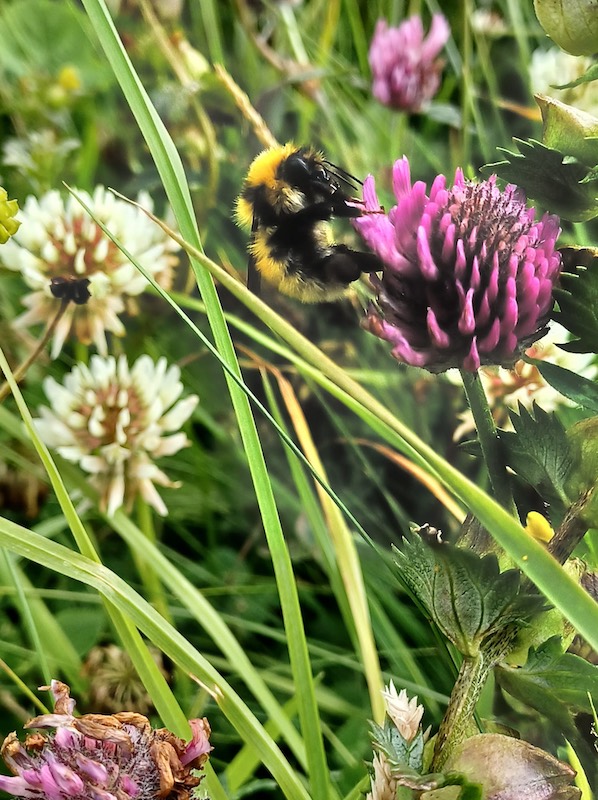
A major partnership is creating new wildflower habitats across Orkney in a bid to reverse the decline of pollinators and protect some of Scotland’s rarest insects.
Orkney Islands Council and the Species on the Edge programme have launched a series of planting projects across the county, bringing together conservation organisations, schools, volunteers and local communities to establish new wildflower areas.
The initiative comes after the loss of around 97 per cent of the UK’s wildflower meadows since the 1930s, contributing to significant declines in pollinating insects including the nationally rare Great Yellow Bumblebee.
Planting has already begun at Warbeth Cemetery in Kirkwall, where volunteers sowed native wildflower seeds and installed fencing and information signs, with further projects taking place near road verges in Kirkwall and Burray.
Additional planting events are planned in Stromness, St Margaret’s Hope and Dounby over the coming weeks, with local residents, schools and volunteer groups invited to take part.
Helen Cromarty, Species on the Edge Orkney Project Officer, said:
“We are delighted to be working with Orkney Islands Council, UHI, NHS, RSPB Scotland and many others across Orkney to create more vital wildflower areas and provide pollinators with vital food sources and connected habitats.
“Most of this work takes place on the Orkney B line, part of our partner Buglife’s B lines project, which is a series of insect friendly pathways being created throughout the UK that looks like a road map.
“Thank you to all involved, from those who have provided advice to those who are helping us on the ground too.”
Locally collected wildflower seeds are also being grown into plug plants by volunteers and students at UHI Orkney, helping ensure the planting reflects Orkney’s native plant species.
Matthew Wylie, Service Manager for Roads and Grounds at Orkney Islands Council, said:
“Creating space for nature within our roadside network is an important part of how we manage our land.
“By working with SotE and local groups, we can enhance our green spaces in a way that supports wildlife while still maintaining the high safety standards required on our roads.
“These small changes across the county can add up to meaningful improvements for wildlife.
“The Council’s Verge Maintenance Plan recognises the opportunity to conserve and enhance biodiversity in areas where this does not compromise safety.”
The project also extends to the grounds of the Balfour Hospital and several privately owned sites, where new wildflower meadows are being established to create connected habitats for pollinating insects.
RSPB Scotland says previous wildflower planting at its Brodgar and Onziebust reserves has already benefited the threatened Great Yellow Bumblebee, with both reserves due to receive renewed Great Yellow Bumblebee Champion site certificates this month.
Ecological surveys are being carried out to monitor the success of the new planting, helping conservationists understand how pollinator populations respond as habitats become more connected across Orkney.
The partnership hopes the work will not only protect wildlife but also encourage more people to become involved in caring for Orkney’s natural environment.


