

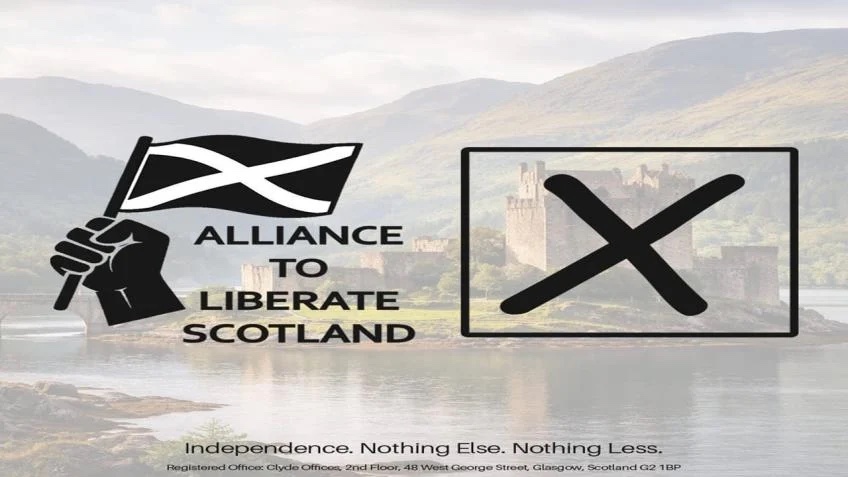
The Alliance to Liberate Scotland has said Scotland is facing an existential crisis, arguing that decades of devolution have failed to deliver meaningful progress for the country.
In a strongly worded statement, the party claims the current political system has left Scotland trapped, with key decisions still shaped by Westminster rather than by communities themselves.
The Alliance argues that issues such as pressures on public services, outward migration of young people and economic underperformance reflect deeper structural problems.
It says these challenges are not isolated, but part of what it describes as a wider pattern of decline under the current constitutional settlement.
The party has positioned itself in direct opposition to what it calls the “status quo”, criticising other parties for continuing to support the existing devolved system.
It argues that devolution has created the appearance of control without delivering full economic or political authority.
Drawing on Scotland’s political and cultural history, the statement references figures such as Jimmy Reid and Robert Burns to underline its call for a more decisive shift in direction.
The Alliance says only full independence would allow Scotland to take control of its economy, resources and long term future.
Alongside its constitutional argument, the party has also raised concerns about its exclusion from televised election debates.
It claims that despite standing candidates across multiple constituencies and regional lists, it has not been given the same platform as other parties.
Candidate Eva Comrie has been highlighted by the party as a key voice it believes should be included in national discussions.
The Alliance argues that the absence of its representatives from debates limits voter choice and restricts the range of views presented during the campaign.
It has called on broadcasters including BBC Scotland and STV to review their approach and expand participation.
The party says the issue is not simply about representation, but about ensuring a broader political conversation as Scotland approaches the election.
It has also framed the upcoming vote as a key moment for those seeking constitutional change, urging supporters to use the regional list system to back its campaign.
The statement reflects a wider debate within Scotland’s independence movement, where different parties continue to set out contrasting strategies and priorities.
For voters, the election will bring those differences into sharper focus, particularly around the pace and approach to constitutional change.
The Alliance to Liberate Scotland has set out its position in uncompromising terms, calling for full independence and raising concerns about its exclusion from televised debates as the election campaign intensifies.


