Households already struggling with rising energy bills are facing another financial blow after the Bank of England increased interest rates to 4%, prompting fresh criticism of the UK Government’s response to the cost of living crisis.
The decision on Thursday 5 November raised the base rate by 0.25 percentage points, increasing borrowing costs for homeowners with tracker mortgages and potentially affecting other households on variable rate deals.
According to banking industry body UK Finance, the increase will add approximately £31 a month to repayments for someone with a typical tracker mortgage.
Over three months, that amounts to around £93, almost equivalent to the £100 household energy payment announced in the UK Government’s Budget on 28 October.
The SNP argues that the increase has effectively wiped out the benefit of the Government’s energy support for affected mortgage holders.
However, the £100 payment announced in the Budget applies directly to eligible households in England, with Scotland receiving additional funding through the Barnett formula rather than an identical payment being guaranteed to every Scottish household.
The increase also does not immediately affect homeowners on existing fixed rate mortgage deals, although those approaching the end of their agreements could face higher borrowing costs.
The Bank of England said its decision was driven by continuing inflationary pressures, particularly rising energy prices linked to the conflict in the Middle East.
UK inflation reached 3.5% in September, with the Bank forecasting that it could approach 5% by the middle of 2027.
Energy costs remain another major concern, with industry forecasts suggesting household bills could rise substantially during the winter months.
The UK Government has extended the removal of VAT on domestic electricity until July 2027, a measure expected to reduce the annual energy price cap by around £50 from April.
The SNP has criticised the scale of that support while renewing its argument that Scotland should have benefited more directly from decades of North Sea oil and gas revenues.
The party has pointed to claims that a sovereign wealth fund established from those revenues could now have been worth £1 trillion, although that figure is a hypothetical estimate rather than money currently held or owed to Scotland.
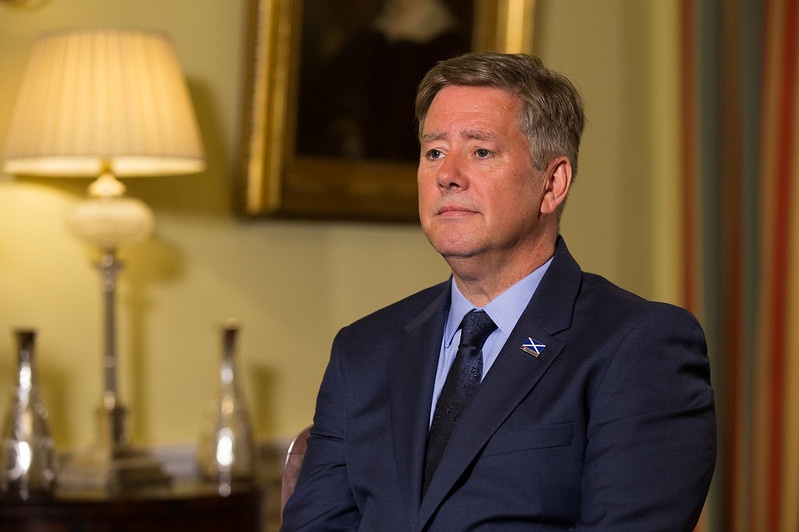
SNP Depute Leader Keith Brown MSP said:
“Just a week after the Labour UK Government announced a meagre £100 to help some households with energy bills this winter, that so called “breathing space” has been immediately wiped out by an interest rate hike.
“The Labour Chancellor has admitted Scotland should have had a £1 trillion oil fund and we now know they want to plunder our North Sea oil and gas to plump up the Treasury coffers while sending nothing back in return, it’s a tale as old as time and every penny of our revenues should stay in Scotland.
“The injustice that energy rich Scotland suffers from an energy price crisis is felt in every single Scottish home so never mind your £100, send back our £1 trillion so we can dish that out to the Scottish people too.
“It is that simple and well understood concept that demonstrates why Scotland needs a fresh start with independence so we can use our huge energy wealth to lower bills and build a better future.”
The Bank of England sets interest rates independently of ministers, meaning Thursday’s decision was not taken by the Labour Government.
Nevertheless, the combination of higher mortgage repayments, rising energy costs and persistent inflation is adding pressure to household finances across Scotland.
For families facing another expensive winter, the immediate concern is less about political arguments over who controls Scotland’s energy wealth and more about how much money will remain in their pockets after the bills are paid.