

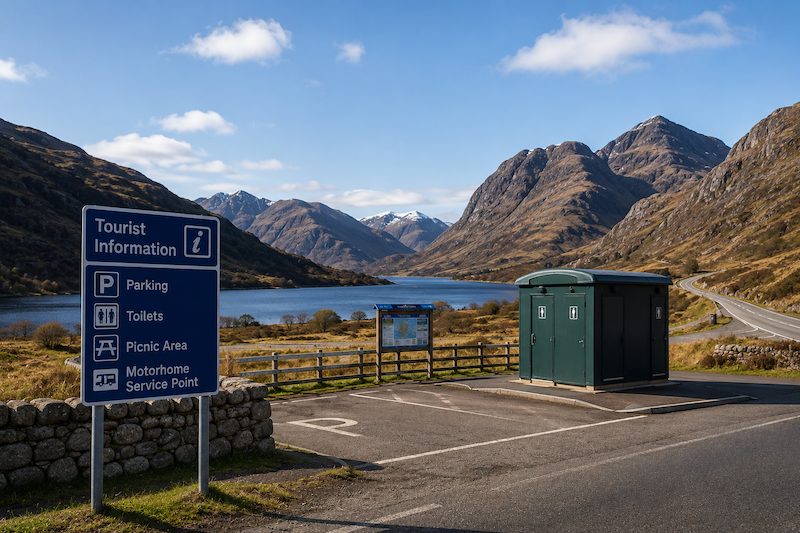
More than £7 million has been secured to improve tourism infrastructure across the Highlands as local authorities and communities continue working to balance growing visitor numbers with the protection of some of Scotland’s most treasured landscapes.
The funding, secured through the Scottish Government’s Rural Tourism Infrastructure Fund, has supported dozens of projects across the region since The Highland Council’s Strategic Tourism Infrastructure Development Plan was launched in 2022.
From improved parking facilities and upgraded path networks to public toilets and dedicated motorhome facilities, the investment is aimed at tackling some of the pressures that have emerged as visitor numbers continue increasing across the Highlands.
Tourism remains one of the most important parts of the Highland economy, supporting thousands of jobs and businesses while bringing millions of pounds into communities each year, but the growth in popularity of destinations across the region has also created challenges around infrastructure, congestion and environmental protection.
Over the past four years, 35 projects have been supported through the programme, helping unlock additional partner funding and delivering more than £12 million of combined investment across the Highlands.
Many of the improvements have been focused on practical infrastructure that visitors often take for granted but which local communities rely on to help manage growing numbers of tourists during the busiest months of the year.
Speaking after a meeting of The Highland Council’s Economy and Infrastructure Committee, Councillor Ken Gowans said the programme was helping deliver meaningful improvements despite continuing financial pressures facing local government.
“The Highland Council has made significant strides in improving tourism infrastructure across the Highlands, securing substantial investment and delivering high-impact projects in partnership with communities and stakeholders.
“These improvements are helping to protect our environment, enhance the visitor experience, and support local economies.
“This is against a very challenging financial backdrop and the need to consider how we raise income for future investment towards a sustainable tourism strategy.
“As visitor numbers continue to grow, we are acutely aware of the challenges and opportunities ahead and that is why it is vital that we remain proactive and strategic in how we plan and invest.
“The proposed updates to the STIDP, alongside the development of a wider Delivery Programme, will ensure we are well positioned to respond to future challenges and opportunities while supporting sustainable tourism across the region as far a possible under our current budgetary constraints.
“Since the STIDP was approved in 2022, 35 projects have been supported, leveraging additional partner funding to deliver a combined investment of over £12 million.
“Improvements include upgraded path networks, new and enhanced parking facilities, public conveniences, and dedicated motorhome infrastructure, ensuring the Highlands remains a world-class and sustainable destination, so we are doing well with our limited resources.”
The Council is now proposing updates to its tourism infrastructure plan to ensure future projects remain aligned with changing visitor patterns and funding opportunities.
Particular attention is being given to locations such as Whaligoe Steps in Caithness and the Devil’s Staircase in Glencoe, both of which continue experiencing significant visitor pressure.
Looking ahead, a new Sustainable Tourism Strategy Delivery Programme will build on the work already undertaken, with the aim of supporting economic growth while protecting the landscapes, communities and way of life that continue drawing visitors to the Highlands from around the world.


