

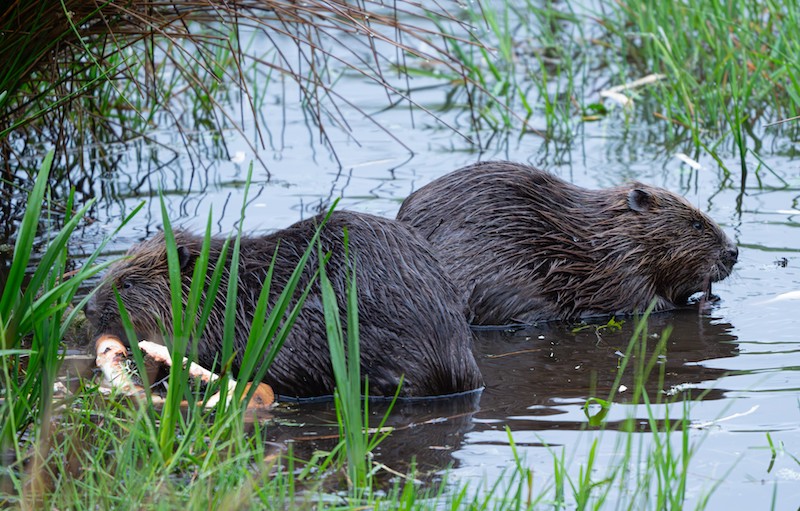
People across Scotland are being encouraged to learn more about beavers as the animals continue their remarkable return to areas where they disappeared centuries ago.
The Scottish Beaver Advisory Group has published a new information pack for communities, land managers, businesses and wildlife enthusiasts as the country’s beaver population grows and spreads.
Beavers were once common across Scotland but were hunted to extinction around 400 years ago.
Their reintroduction means increasing numbers of people are now encountering the animals and the landscapes they create for the first time.
Known as ecosystem engineers, beavers can transform their surroundings by creating and reshaping wetlands.
Those changes can provide new habitats for plants and wildlife, while beaver activity can also help reduce flooding and improve water quality.
Their return can bring economic opportunities too, particularly through wildlife tourism.
But living alongside beavers is not without complications.
Their behaviour can affect farmland, infrastructure and species of conservation importance, meaning intervention and management can sometimes be necessary.
The new resources are intended to explain both sides of Scotland’s changing relationship with an animal that was missing from the landscape for hundreds of years.
Sarah Robinson, Scottish Wildlife Trust’s Director of Conservation and chair of the SBAG comms sub-group, said:
“Beavers have many benefits for climate and nature.
“They are known as ‘ecosystem engineers’ because their activities shape and create wetland areas that benefit many other animals and plants.
“They can also reduce flooding, improve water quality, and bring socio-economic benefits such as tourism business opportunities.
“With beavers expanding into new areas, more people may be encountering beavers and their activities for the first time.
“These resources provide a helpful introduction for individuals, communities and land managers to learn more.”
Nadia Flaherty, Policy Adviser at Scottish Land & Estates, said:
“While beaver behaviours can bring many ecological benefits, there are some situations where beavers negatively impact land management, infrastructure or other species of conservation importance.
“As a result, their impacts need to be managed.
“With beavers back in Scotland and their numbers growing, it is important that we learn about them, how to live alongside them, but also how and when to manage and mitigate any negative impacts.
“The pack includes information on where to go for advice for anyone experiencing negative impacts associated with beavers for the first time.”
Some of that expansion is being driven by planned releases into suitable areas, while beavers are also spreading naturally as younger animals leave their families and establish territories of their own.
Jenny Bryce, NatureScot beaver team manager, said:
“The beaver population is growing and will continue to spread across Scotland.
“This is partly through planned releases to new suitable areas, as well as through natural expansion as young beavers grow up, leave their family units and start families of their own.
“So, now is a really good time to learn about these native animals and the benefits and impacts they can have.
“We hope that these resources will help raise awareness and understanding of beavers as we all learn to live alongside them again.”
Four centuries after disappearing from Scotland, beavers are becoming neighbours once more.


