

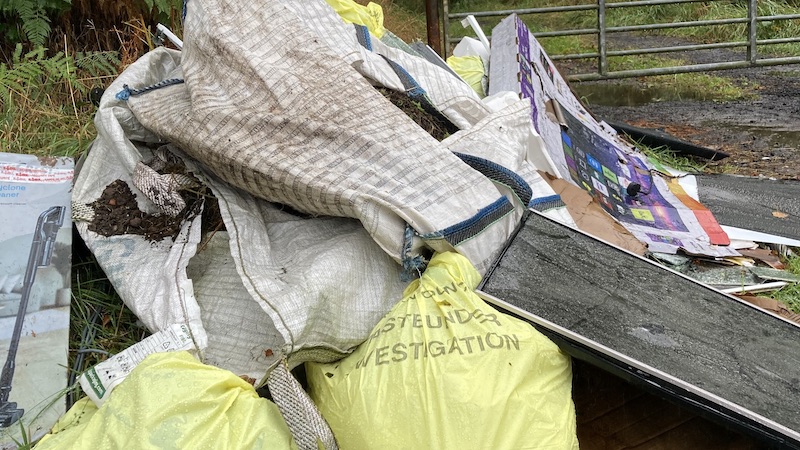
That old sofa, pile of garden rubbish or unwanted household furniture might be out of sight once somebody takes it away, but if it ends up dumped in a field or beside a country road, the responsibility could still come back to your door.
Environmental charity Keep Scotland Beautiful has launched a new campaign reminding householders that paying someone to remove unwanted items does not automatically mean their waste has been disposed of legally.
The warning comes as Scotland continues to grapple with flytipping, with an estimated 26,000 tonnes of waste illegally dumped across the country every year.
Research also shows that 84% of people in Scotland believe flytipping is a national problem, reflecting widespread frustration at the damage caused to communities and the environment.
For rural communities across the Highlands and Islands, discarded furniture, building materials and household rubbish can leave an unwelcome mark on some of the country’s most beautiful landscapes.
The new campaign, which uses the message Bags of Evidence, aims to help people understand what they should check before handing their waste to somebody else.
One of its most important messages is that householders have a responsibility to establish whether the person collecting their rubbish is properly authorised to carry waste.
According to Keep Scotland Beautiful, 38% of people do not know they should check whether a waste collector holds the necessary licence.
That lack of awareness can prove expensive, with householders potentially facing fines of up to £500 if their waste is illegally dumped and subsequently traced back to them.
The charity is encouraging people to use their local council’s household waste and recycling centres wherever possible, or ensure that any private waste removal service they employ is appropriately registered.
Heather McLaughlin, Campaigns Manager at Keep Scotland Beautiful, said:
“Flytipping is a serious crime.
“We understand that the majority of people who want to get rid of waste simply pay the best price for someone to remove the items, they don’t think about what happens to it and whether it ends up in the right place or just dumped.
“But the bottom line is your waste is your responsibility; 38% of people don’t know it is your responsibility to check if the person you ask to remove your waste has a license.
“We know how costly flytipping is to remove; it is not victimless, and we know how it makes people across the country feel as it ruins their communities.
“So next time you’re having a clear out or doing some renovation, dispose of your waste correctly yourself at a council recycling centre or ensure the person you’re paying to dispose of it has a license to do so.”
Flytipping can leave landowners, local authorities and communities dealing with the cost and inconvenience of clearing rubbish which should never have been dumped in the first place.
Beyond the financial burden, discarded materials can damage wildlife habitats, spoil public spaces and undermine the efforts of volunteers who work hard to keep their communities clean.
The campaign forms part of Keep Scotland Beautiful’s support for the Scottish Government’s National Litter and Flytipping Strategy.
For anyone planning a house clearance, garden tidy or renovation, the advice is straightforward: check who is taking your rubbish and make sure they are authorised to dispose of it.
Further information about responsible waste disposal, finding reputable collectors and reporting flytipping is available through the charity’s Community Litter Hub at keepscotlandbeautiful.org
A few minutes spent checking where your rubbish is going could help protect the places we share and prevent an unexpected fine landing on your doorstep.
For more information on flytipping, including finding a reputable trader or reporting a crime, visit the Community Litter Hub: Preventing waste | Community Litter Hub


