

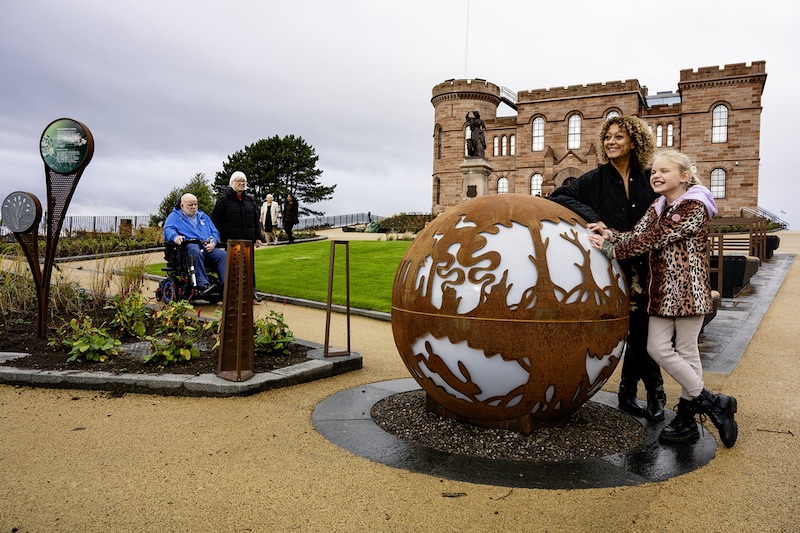
The Inverness Castle Experience will mark Earth Day on Wednesday 22 April by highlighting how sustainability has shaped the redevelopment of the landmark building in the heart of the city.
The project has focused on reducing environmental impact while preserving the historic character of the castle and strengthening its connection to the Highlands.
The castle grounds have been redesigned to support biodiversity, with native planting, wildflowers and new habitats for wildlife including swift boxes, insect friendly spaces and a peregrine falcon nesting platform.
Mature trees have been retained and protected, with planting designed to deliver long term environmental benefit.
Inside the building, major upgrades have improved energy efficiency despite its listed status.
Insulation has been enhanced, windows refurbished and draught proofed, and modern ventilation systems installed to improve performance and comfort.
The building’s energy rating has improved from EPC F to EPC B+, demonstrating how historic properties can be adapted for modern use.
The castle now operates without fossil fuels, with heating provided by air source heat pumps.
Smart systems monitor energy use across the site, supporting ongoing reductions in demand.
Lighting throughout the building is fully LED, with sensors and controls used to limit unnecessary energy use.
A new Sustainable Energy Centre also provides heating to nearby buildings, including Inverness Town House.
The project has also focused on local supply chains, with more than 35 local producers involved in retail and food offerings.
Steve Walsh said:
“Now fully operational, The Inverness Castle Experience shows how sustainability can be embedded in the everyday running of a nationally significant heritage site.
“From enhancing biodiversity and eliminating fossil fuels to supporting local producers, sustainability is not an add-on here, it is part of how the experience operates.
“This approach allows us to protect and celebrate this historic building while responding meaningfully to the climate and nature emergencies, and delivering lasting benefits for the Highlands, environmentally, culturally and economically.”
The project is being positioned as an example of how heritage sites can adapt to meet modern environmental challenges while continuing to serve their communities.


