

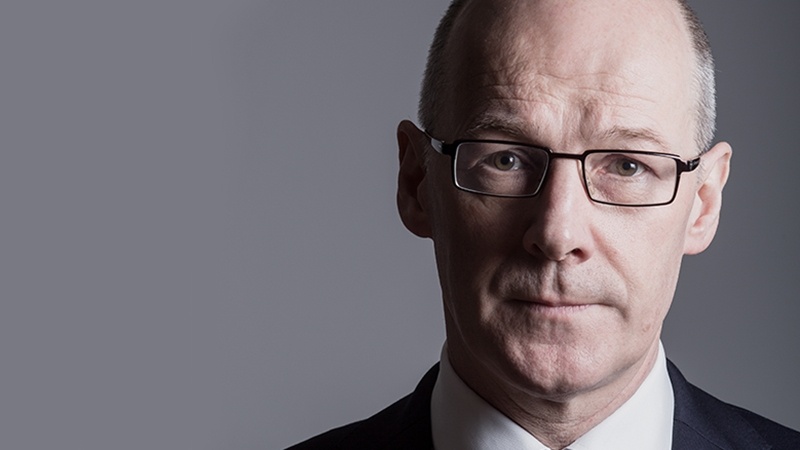
John Swinney has said people across Scotland are paying the price for Westminster decisions on fuel, as he called for urgent action on rising costs.
Speaking while campaigning in the Highlands, the First Minister said fuel prices are placing growing pressure on households, particularly in rural areas where car travel is essential.
He argued that Scotland’s position as an energy producing nation is not being reflected in the prices people are paying at the pump.
John Swinney said:
“In energy rich Scotland filling up the tank should not mean emptying your bank account.
“But that is the situation facing far too many people as the crisis continues and Westminster simply refuses to act to help people.
“This is even more of a worry in places like the Highlands and across rural Scotland where people rely on the car to get about, which is always an afterthought for Westminster.”
The SNP has called on the UK Government to remove VAT on fuel during the current period of high prices and to cancel a planned increase in fuel duty.
The comparison has also been drawn with Ireland, where the government has already introduced fuel duty cuts alongside wider cost of living support measures.
John Swinney said:
“The fact is that Scotland has the energy, but Westminster is setting the price and it just does not work for us.
“If Westminster will not act, then they should get out of the road for an SNP Government that will.
“And the way to ensure that these powers are in Scotland’s hands is with the fresh start of independence.
“That would mean we could take real action to help people and bring down prices, just like other independent European countries like Ireland.
“Scotland is an energy superpower and with the fresh start of independence we can make that energy work for us, bring down electricity bills and lower prices at the pumps.
“But we have to make it happen, and the way to do that is with an SNP majority on 7th May.”
The comments reflect a wider focus on fuel costs as a key issue for voters, particularly in the Highlands where distances are greater and alternatives to car travel are limited.


