

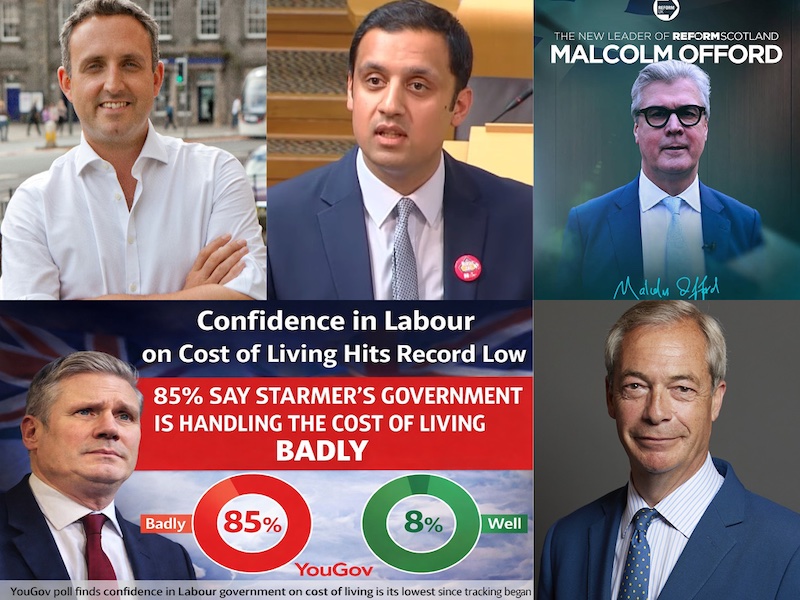
Fresh political tensions have emerged following claims about possible post election cooperation between parties at Holyrood, with questions raised over how a future government could be formed.
The debate centres on comments suggesting the Liberal Democrats could consider supporting a Labour government after the election, depending on the outcome.
Any such arrangement would require backing from other parties under the parliamentary system, where no single party is guaranteed a majority.
The situation has prompted criticism from political opponents, who argue that voters should be clear about potential outcomes before casting their ballots.
Maree Todd said:
“Alex Cole-Hamilton has let the cat out of the bag.
“If people in Scotland vote Lib Dem, they risk waking up with a Labour government propped up by Reform.
“Alex Cole-Hamilton now finds himself embroiled in the grubby deal scandal with Reform that has completely derailed Labour’s campaign.
“Labour has hammered rural Scotland with sky-high heating bills, soaring petrol prices and a crippling family farm tax, yet Alex Cole-Hamilton would give them a leg-up into Bute House, that isn’t putting our highland communities first, it is a kick in the teeth to families across the region.
“It is beyond belief that the Lib Dems would consider installing a Labour government after they treated the Highlands and Islands as an afterthought for decades and with them engulfed in scandal and chaos amidst the Peter Mandelson affair.
“But to be open to a deal that would have to include working with Reform is unthinkable, there is nothing liberal or democratic about working with Nigel Farage’s right-wing party.
“People across Scotland will be wondering just how far the Lib Dems have sunk.
“We already have one disastrous Labour government, the Lib Dems cannot land us with another one propped up by Nigel Farage and Reform.
“This shows why the Lib Dems just cannot be trusted and why people in the Highlands and right across Scotland need to unite behind the SNP to deliver a majority SNP Government that unlocks the fresh start of independence and locks Reform out of power.”
The issue highlights the role of cooperation and negotiation in forming governments when election results do not produce a clear majority.
It also reflects the increasingly complex political landscape ahead of the upcoming vote.


